
Modu
01
Ushi
02
Odor
03
Wool pack
04
Ushi
Waste not, want not.
02
Background
2025
Solo project
Source: UNFCCC
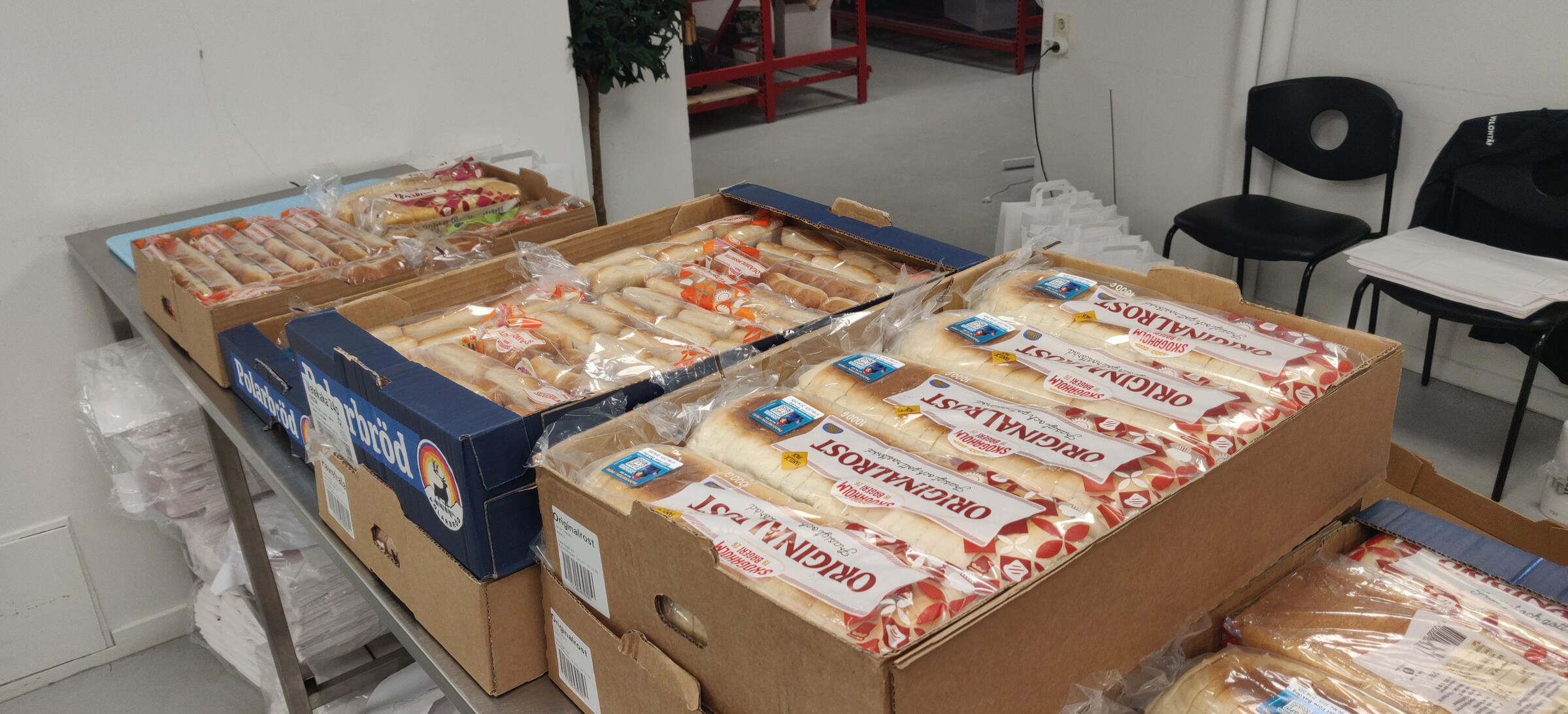
About one-third of all food produced is wasted each year; this excess is responsible for about 10% of the global greenhouse gas emissions annually.Objective: Exploring whether design has the potential to be a key in solving the multifaceted problem of food waste. Design was used as both a method of research and a development tool when shaping the product concept for one possible solution.
The Concept
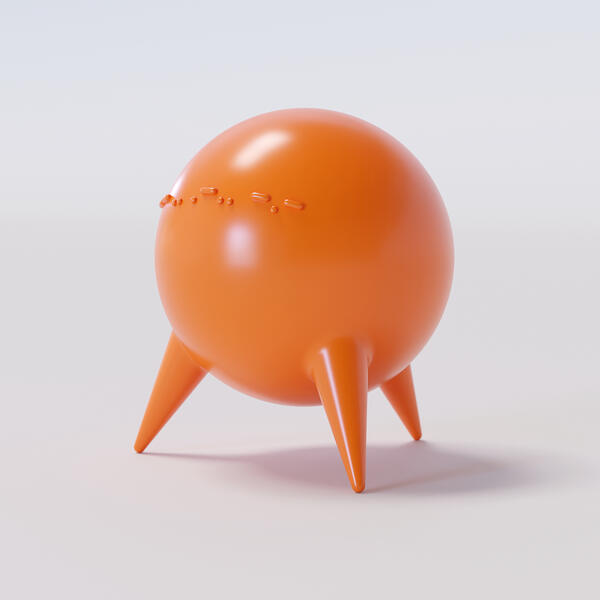
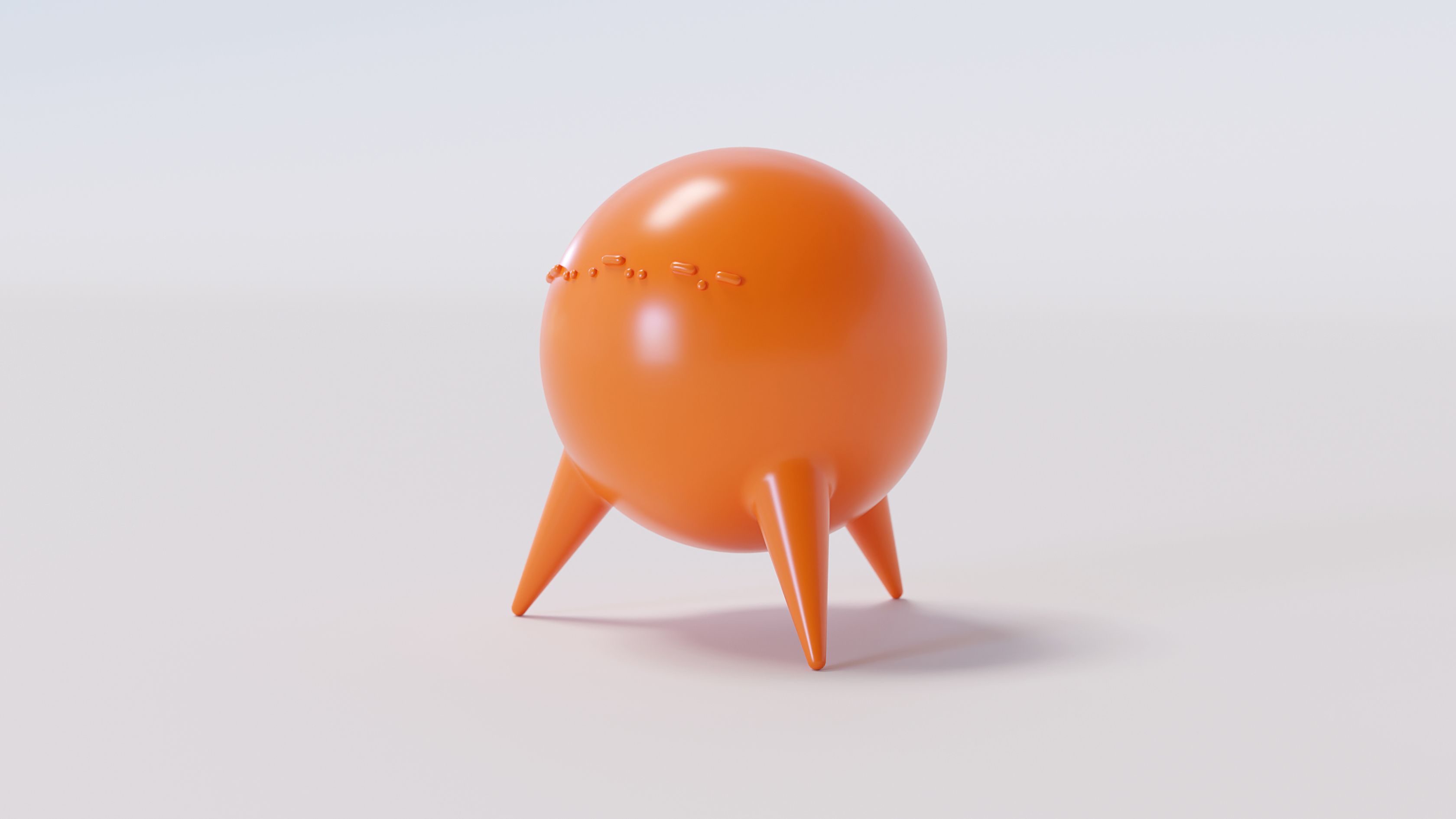
Ushi was developed in response to consumers' desire for the food that they purchase to have a long shelf life. By extending the shelf life of milk at home, we can reduce the risk of it going bad when forgotten, while also prolonging its freshness.
Color shift
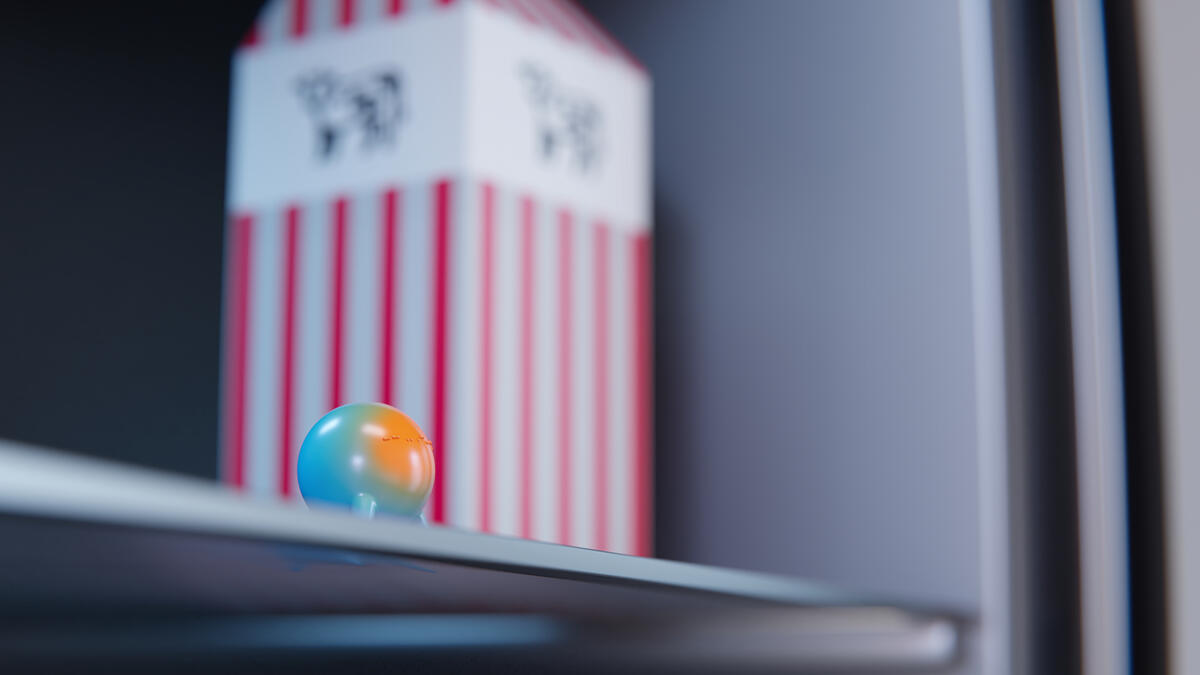
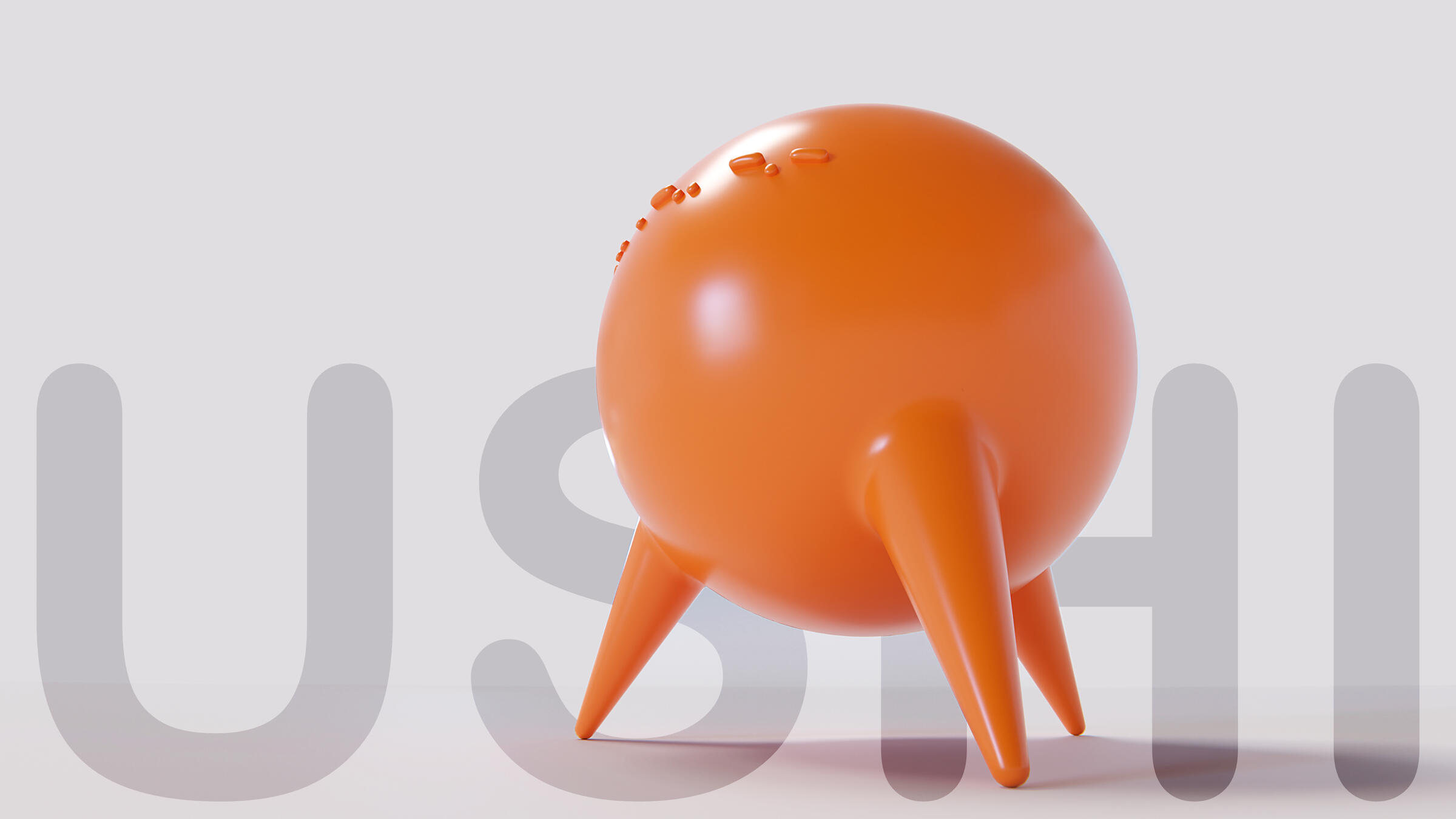
Ushi utilizes an intuitive visual nudge that indicates the correct storage temperature for your milk, while also alerting you to cooling inadequacies, without requiring prior knowledge. The correct temperature can almost double the shelf life of milk.
Building better habits
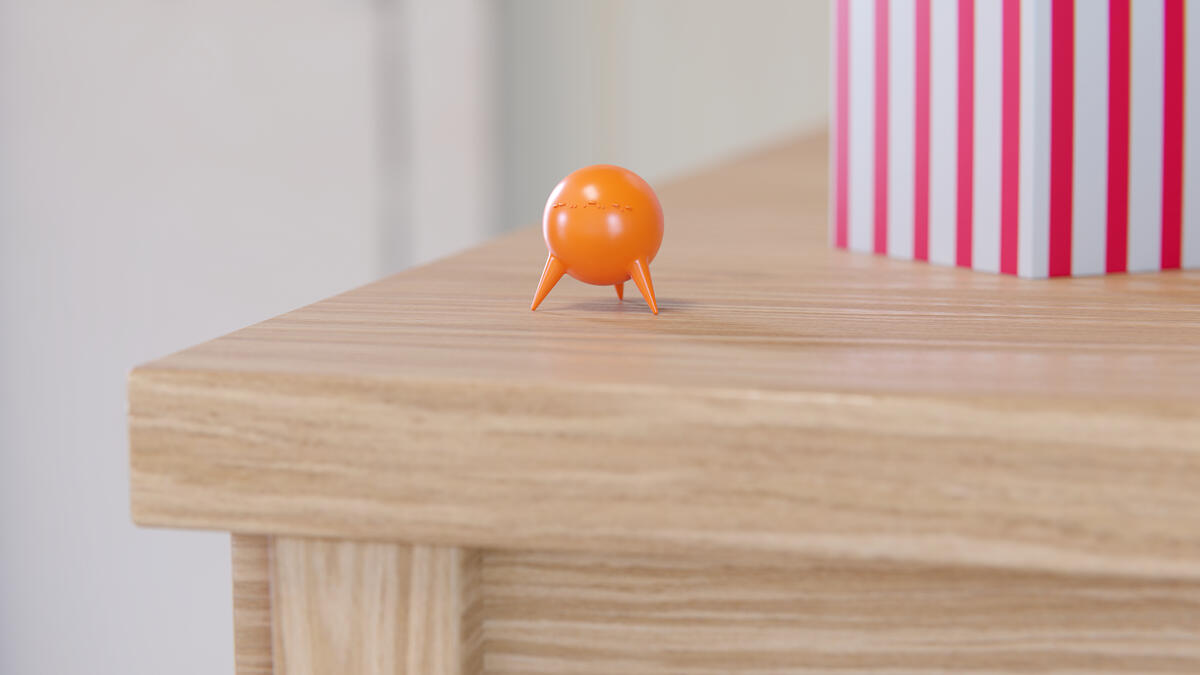
When you bring Ushi to the table, it shifts hue after warming up, reminding you when it is time to put the milk back in the fridge in order to avoid a reduction in shelf life.
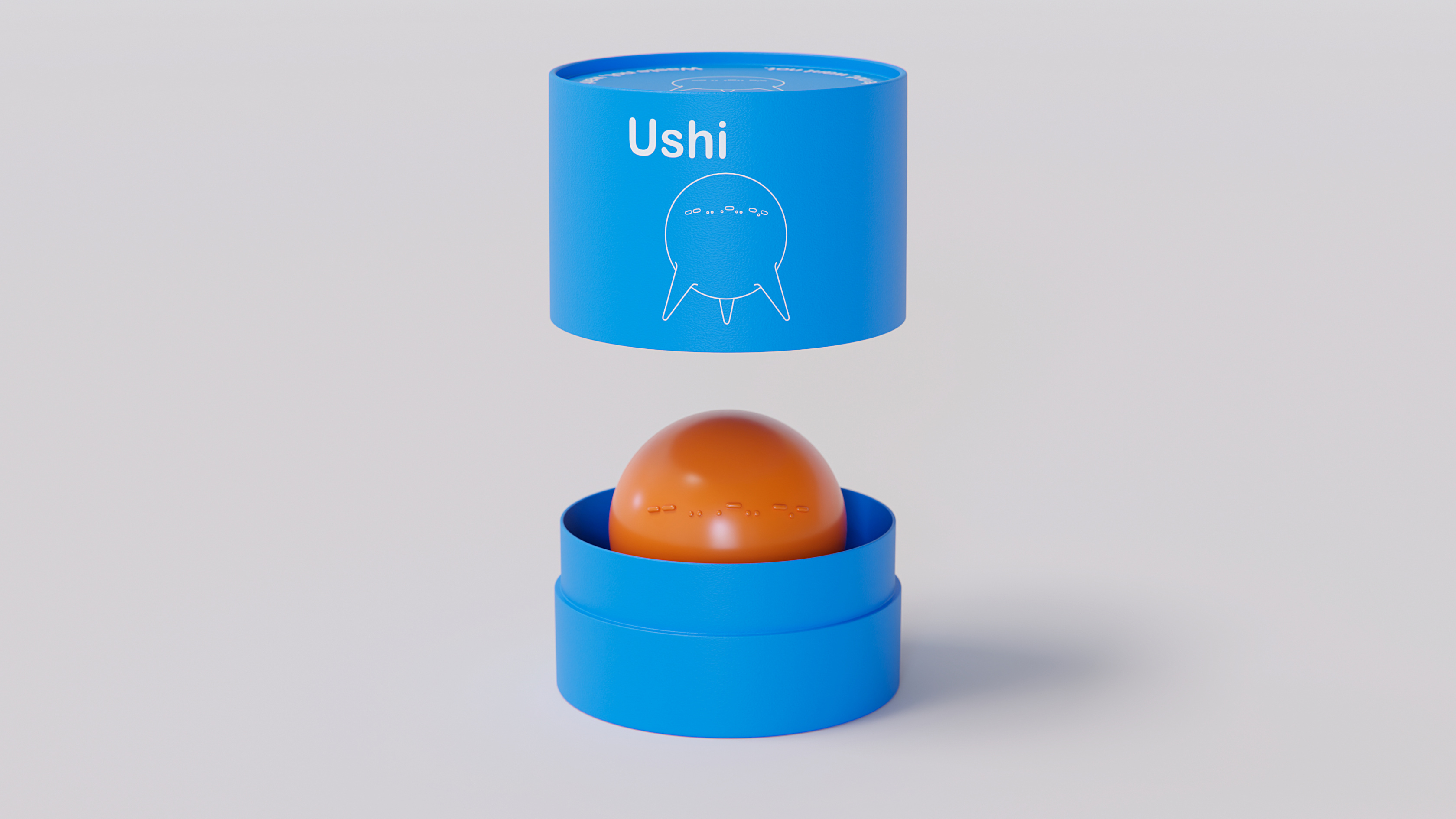
Ushi's mission
Avoiding unnecessary waste and building better habits for you and your family while also sparking intrigue and awareness amongst the youngest consumers in the household.


Process
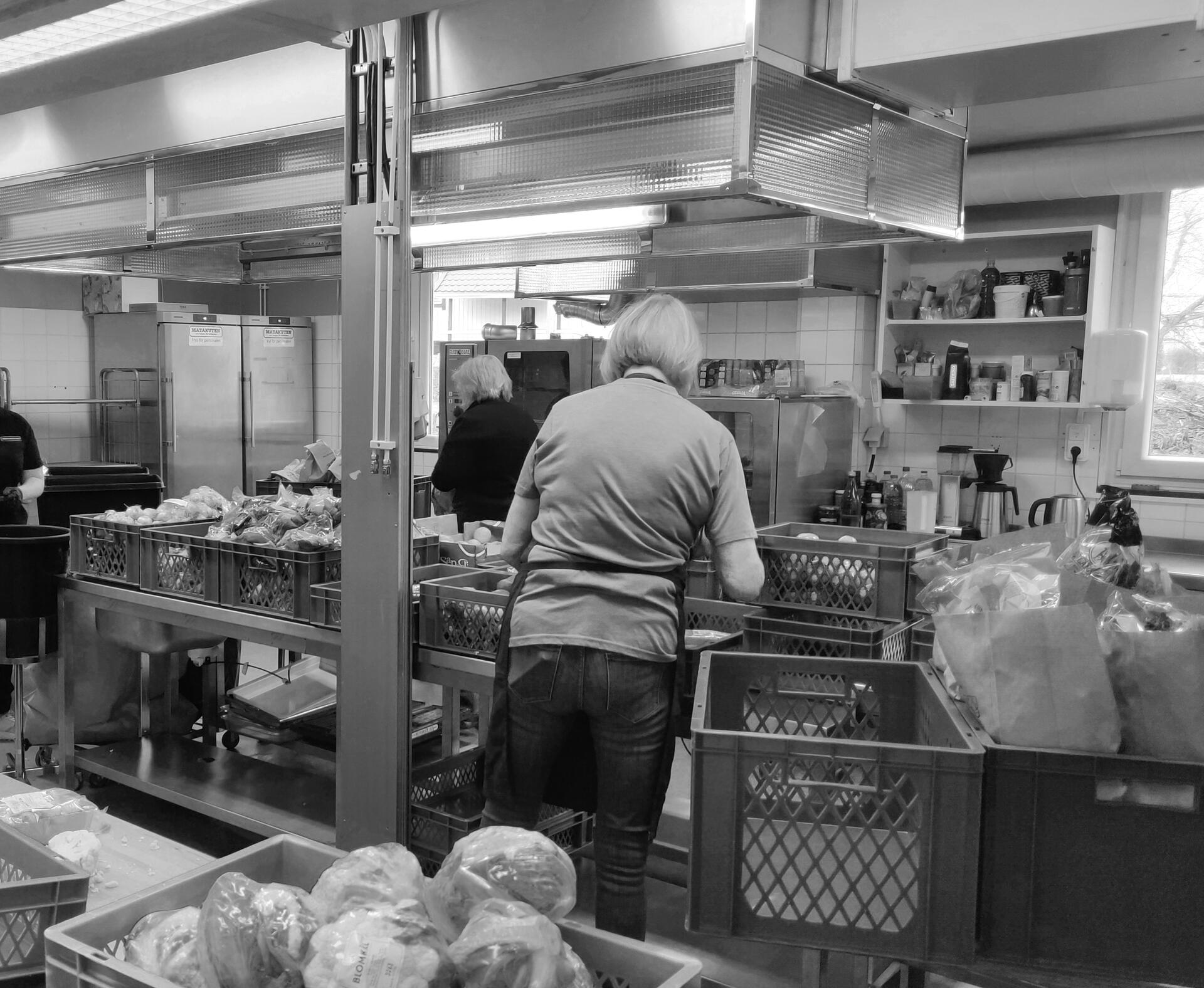
I began my journey with a visit to a local food bank, where I conducted an interview in order to gain some insight regarding food waste. I left with a deeper understanding of the problem and its multifaceted nature, which helped during my further research.Analysing and understanding the many different causes that lead to food waste was important for narrowing the scope of the project. Enabling me to identify which type of food waste could best be tackled by design.
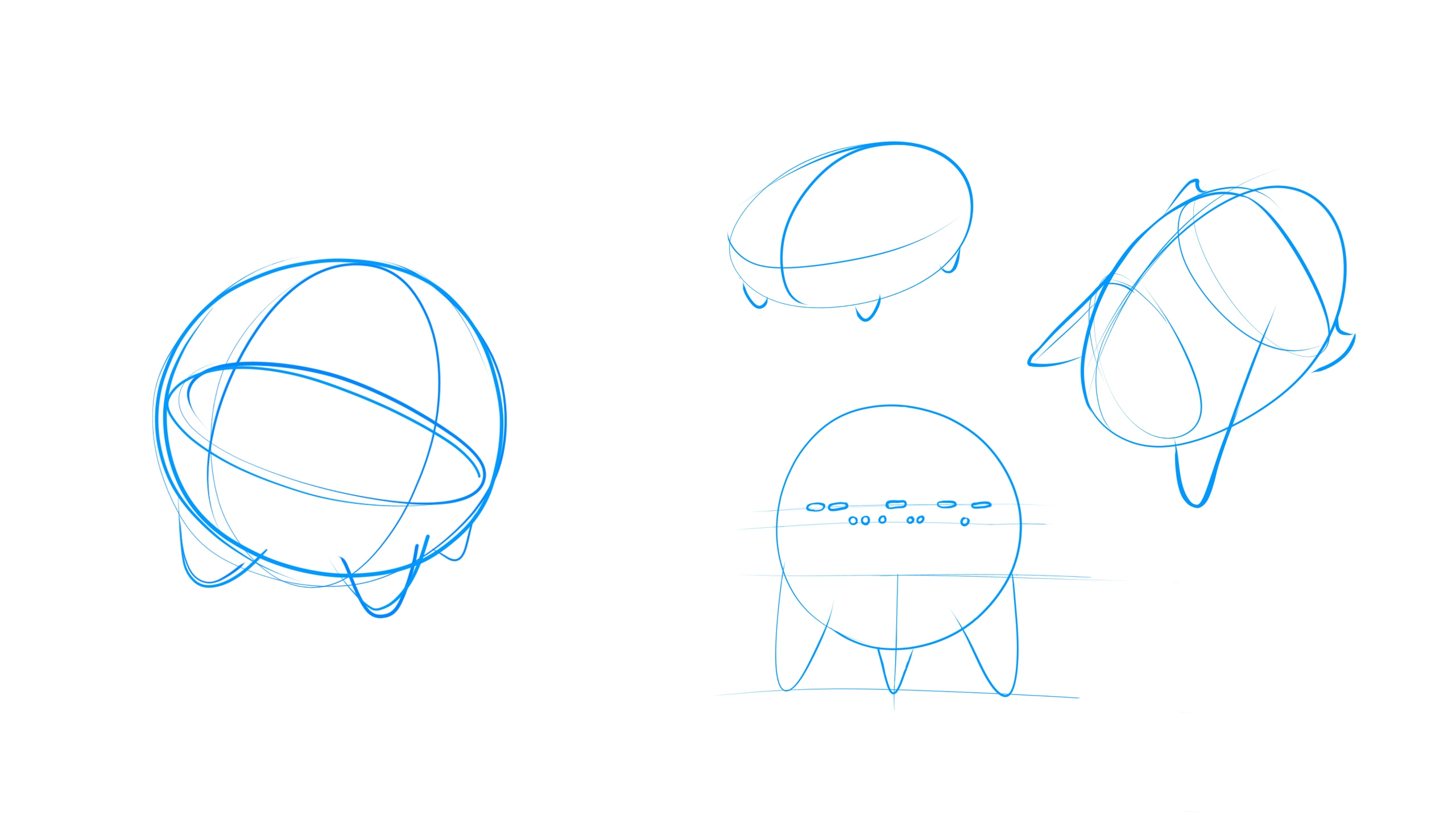
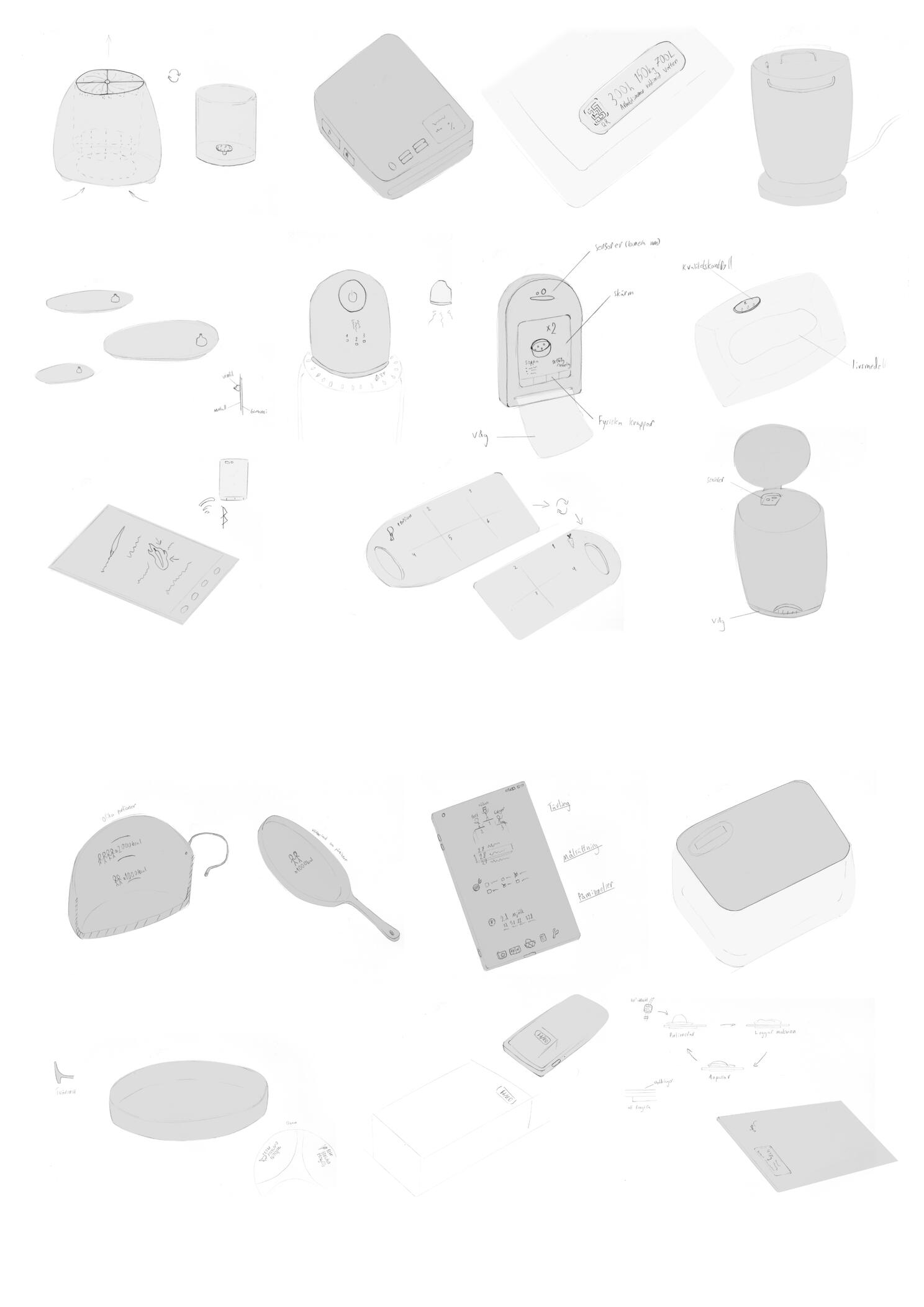
Ideating early concepts that propose possible ways to tackle food waste in the consumer's home, developing the concepts through peer feedback and iteration.
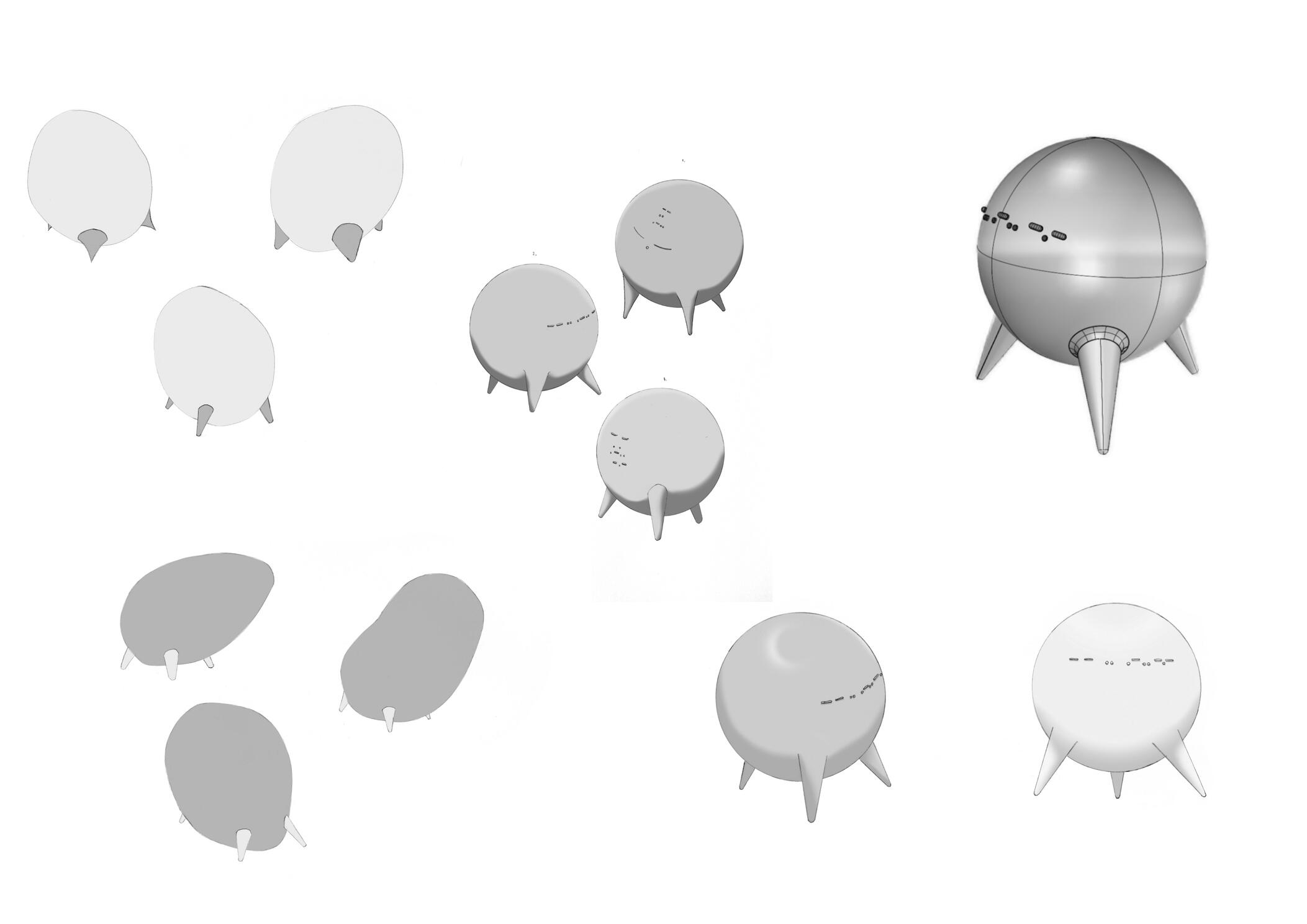
Once the early design phase was concluded and the functionality was determined, it was time to shape the vessel for the idea. Ushi was designed to be playful and cheap to manufacture.
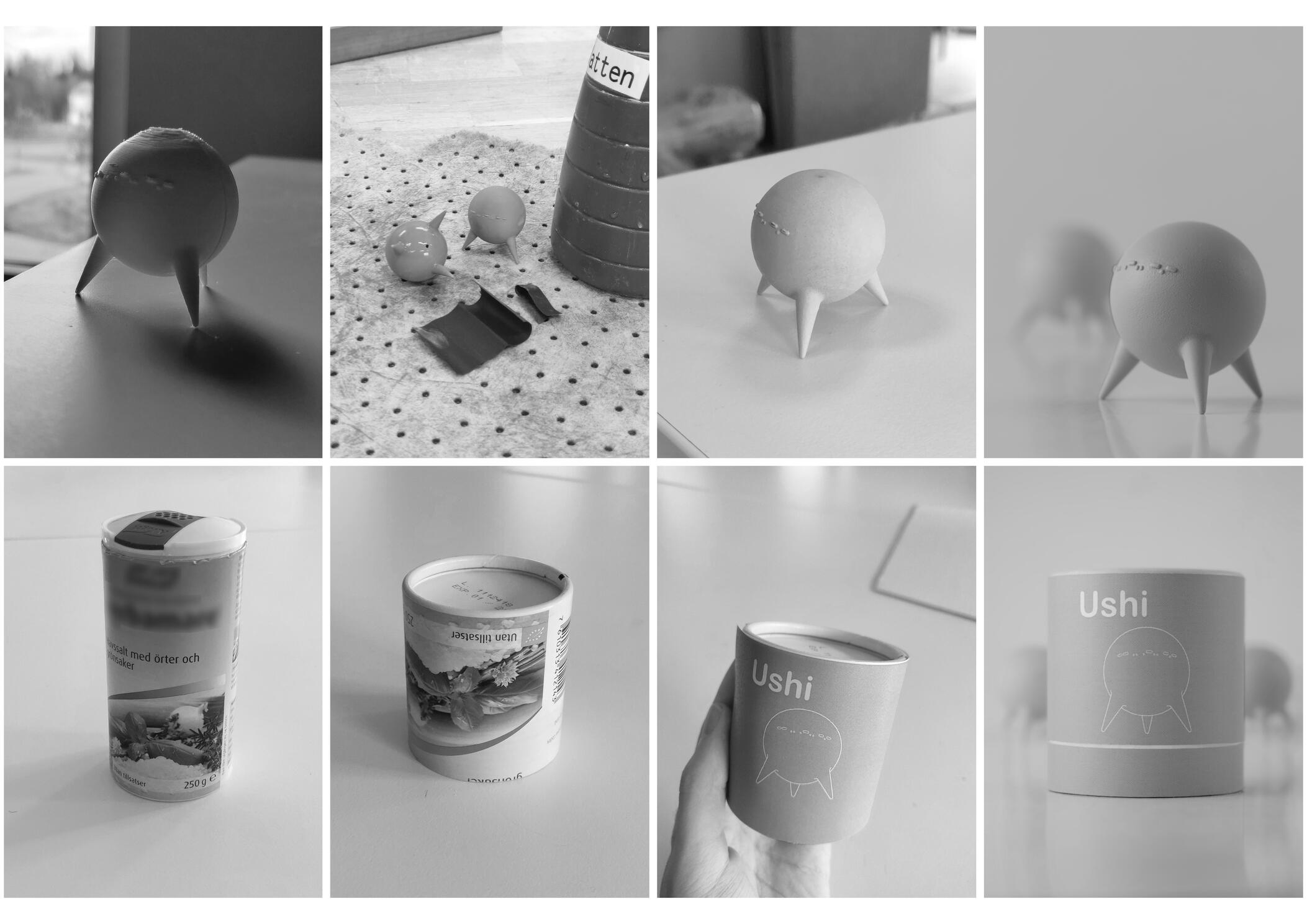
Printing and refining a one-to-one model and a simple cardboard tube packaging mockup for the final graduate project exhibit taking place at HIG.
Modu
Designed to outlive you.
01
Background
2026
Solo project
2 Weeks
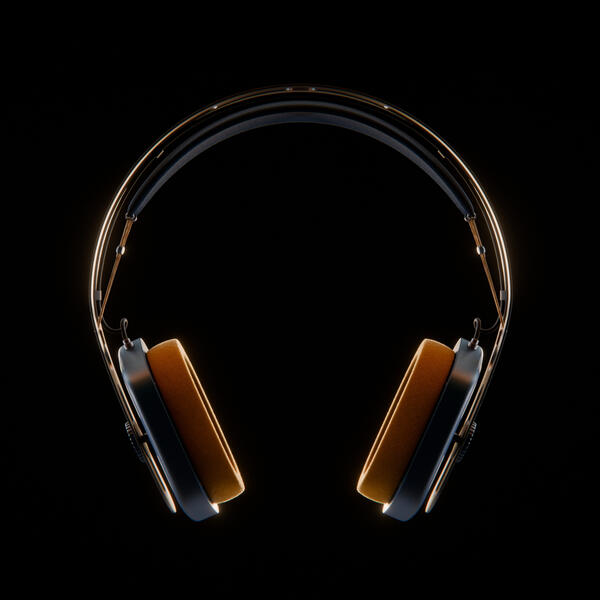
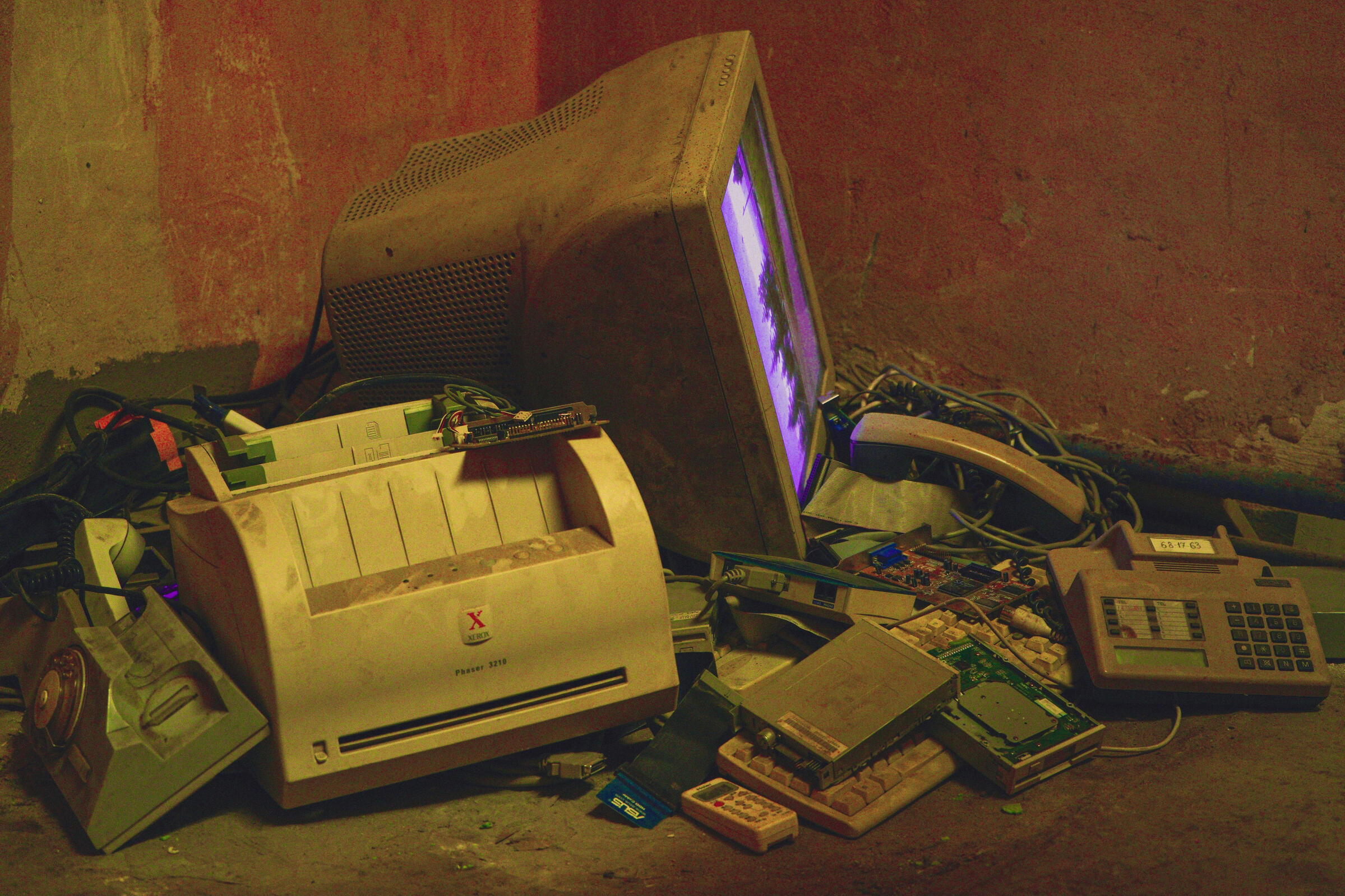
Most headphones today aren't built to last. Flimsy hinges that break, batteries dying, faux leather peeling and a pitiful reliance on glue that prevents user repair and may induce contact allergies. It's anti-consumer as well as unsustainable. That's why I choose to challenge myself to design a product that will outlast you.Objective: What would a pair of headphones designed for a conscious consumer look like?
They need to have easily replaceable parts, be repairable at home and possess good structural integrity without compromising on comfort or appeal.
The Concept
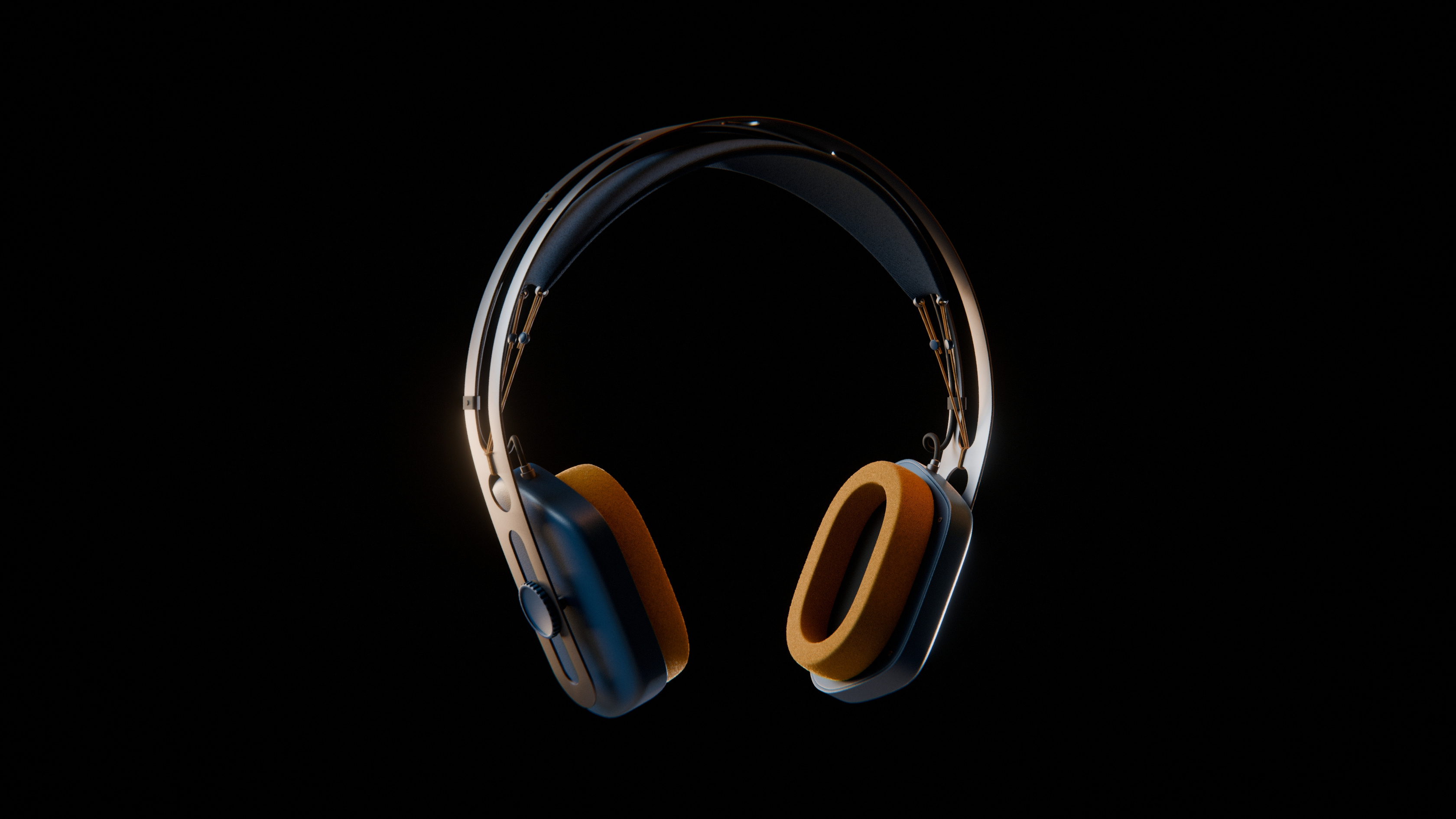
More than a pair of headphones, Modu is the launchpad for your imagination. The design is a modular platform where everything can be swapped, repaired and customized, including the titanium alloy frame.
Accommodating
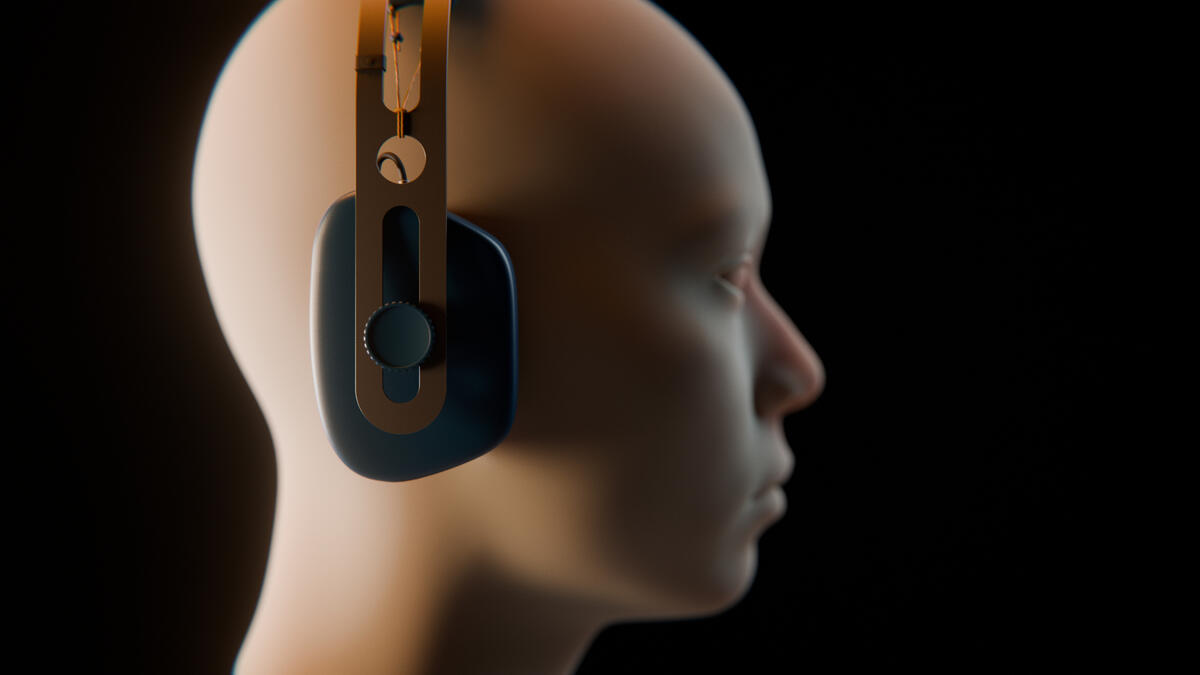
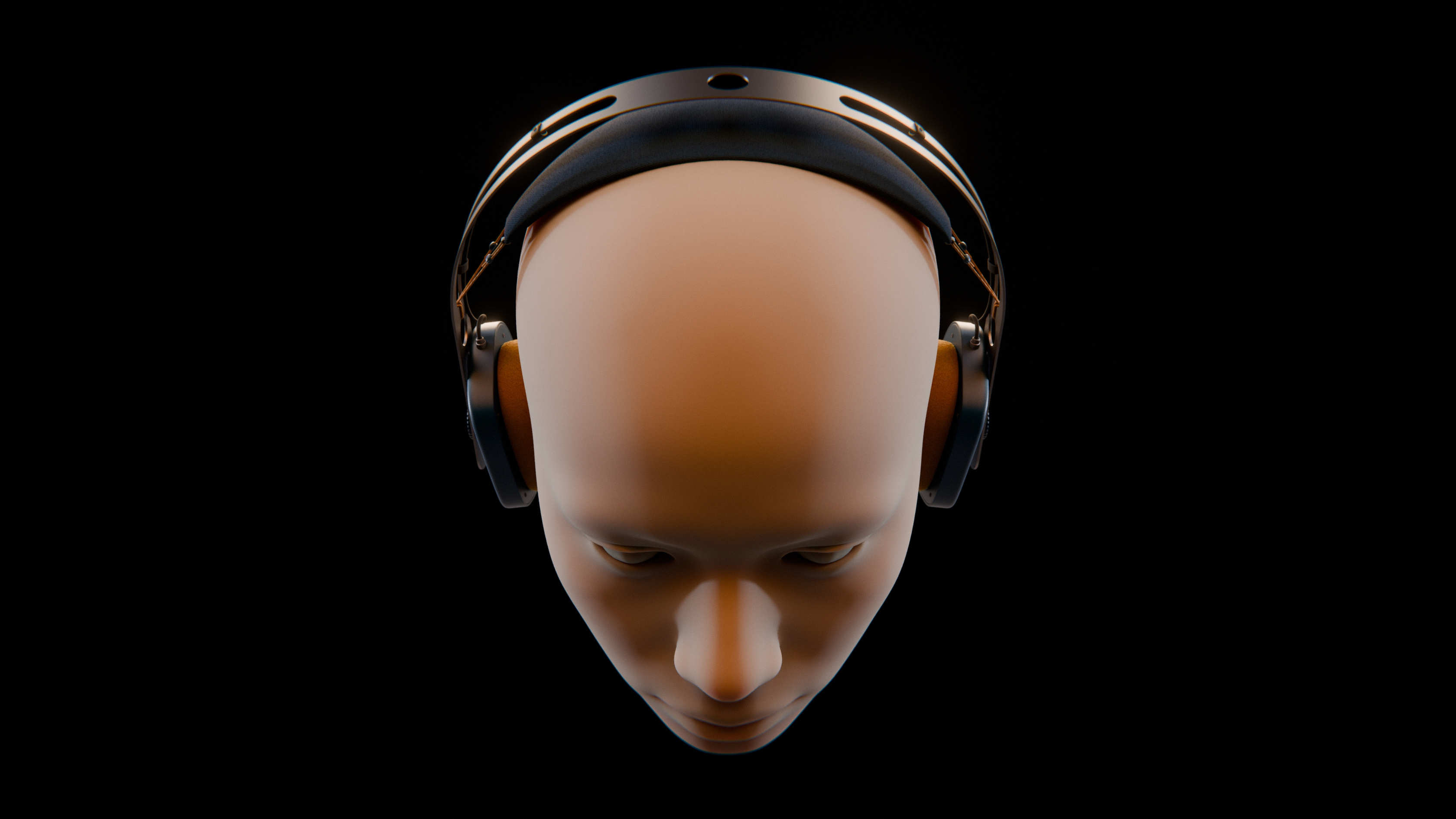
The headphones are adjustable, but every person's biology is unique. Modu is the base and the user is encouraged to shape the product to their needs. Dislike the feel of the fabric? Swap for leather, but keep the original as spares.
Modular
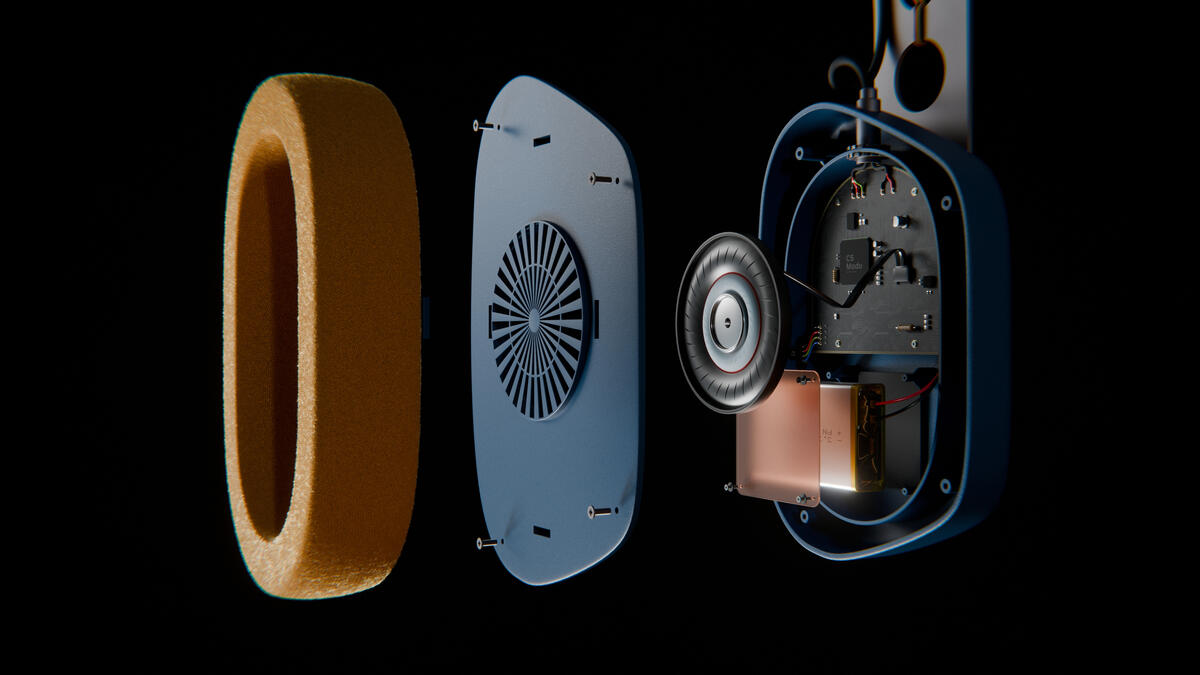
Modu is designed to be built and rebuilt for life, accessible to people of all skill levels. Fully repairable and customizable at home. Utilizing friction fitting and screws enables parts to be modular while avoiding cheap irritants like glue.
Seamless
Wireless without a bloatware app.
USB-C for fast charging, wired listening and firmware.
Easy access to internals without proprietary tools.
Intuitive physical buttons, identifiable by shape and texture.



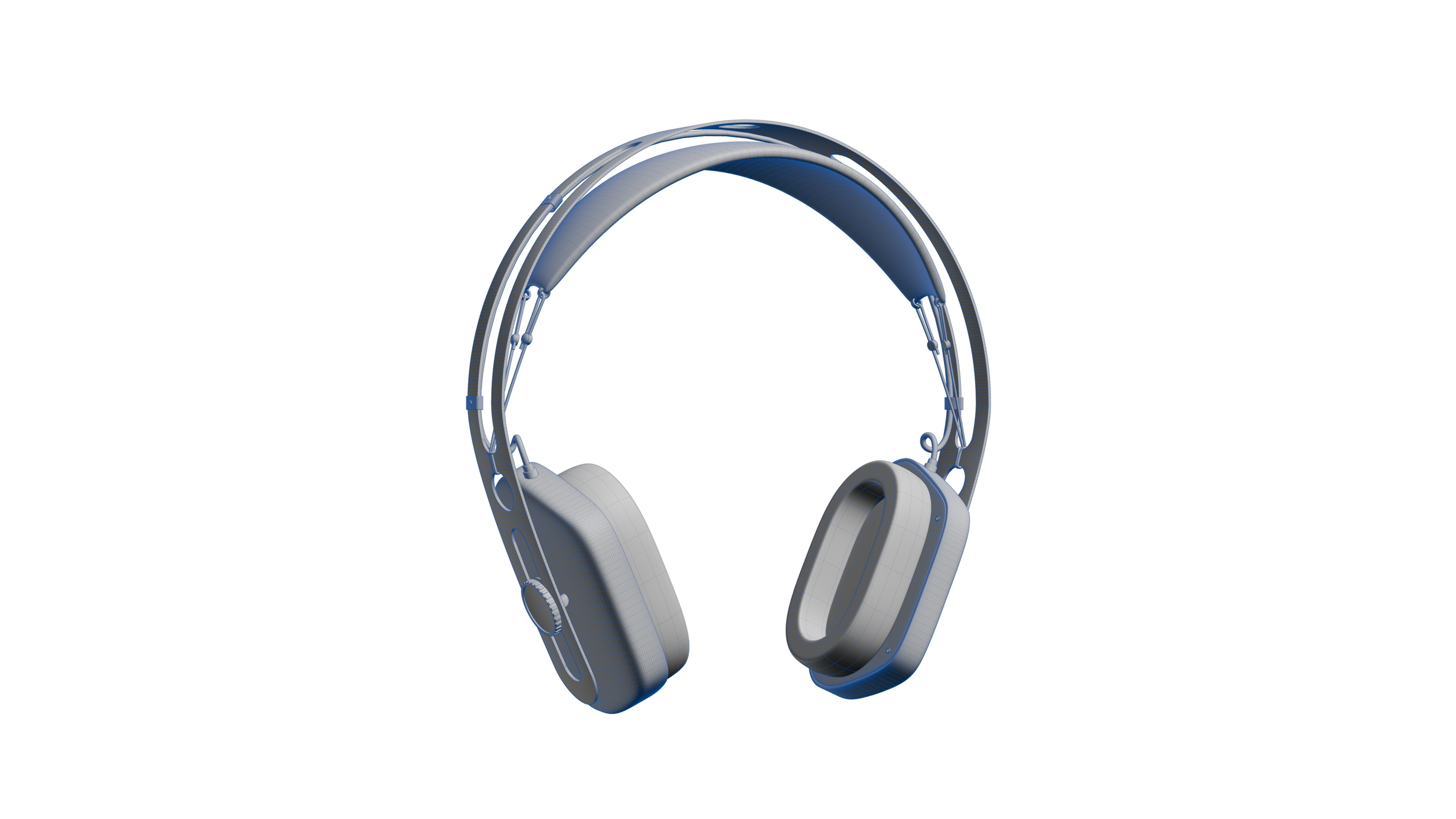
Process
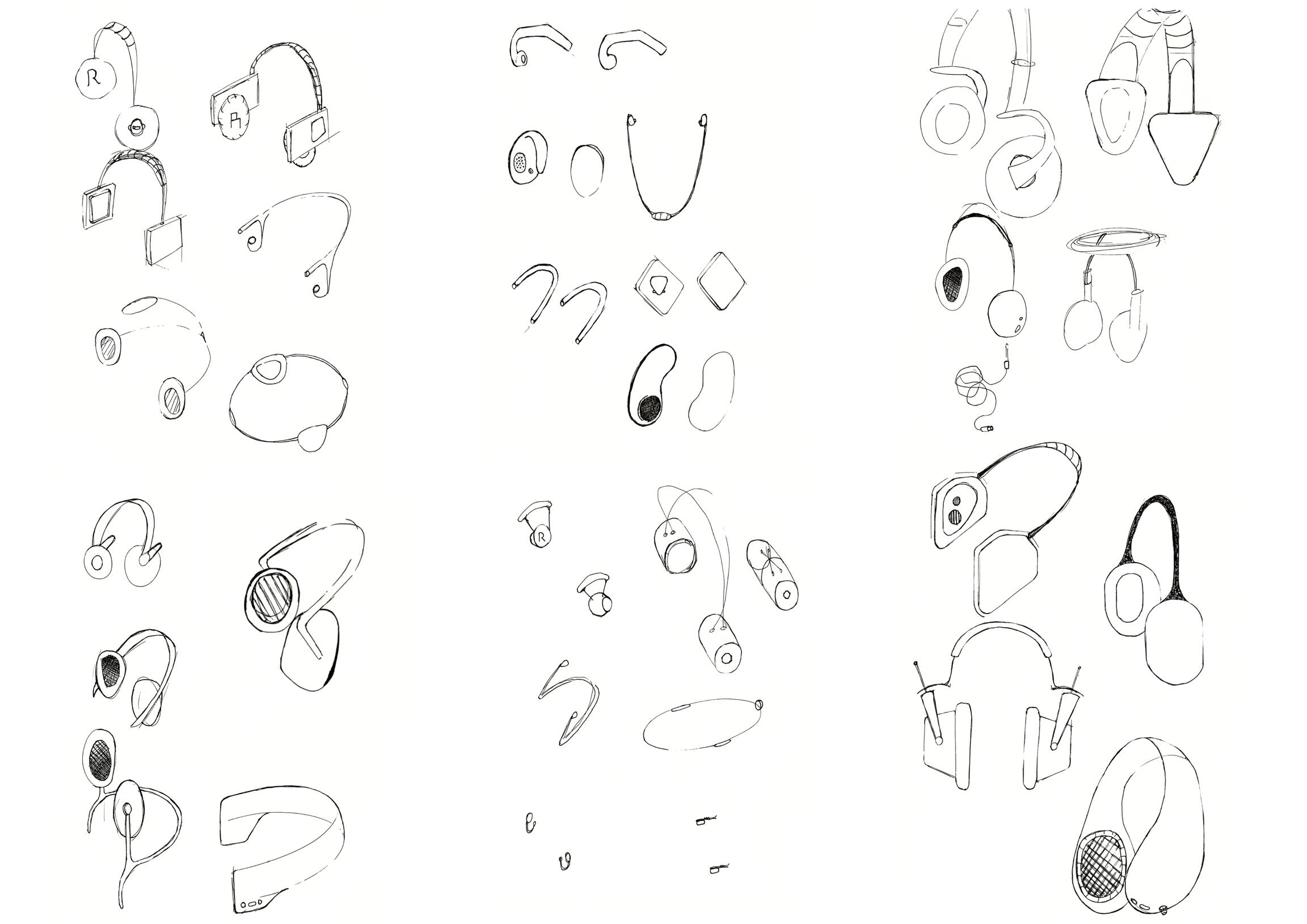
During iteration, I formed the abstraction for radical modularity, evolving Modu from a product into an idea. I could then utilize this in my design approach when shaping the concept.Brainstorming was my starting point. I utilized it to open myself up to lots of options and ideas, which I could pick and choose from.
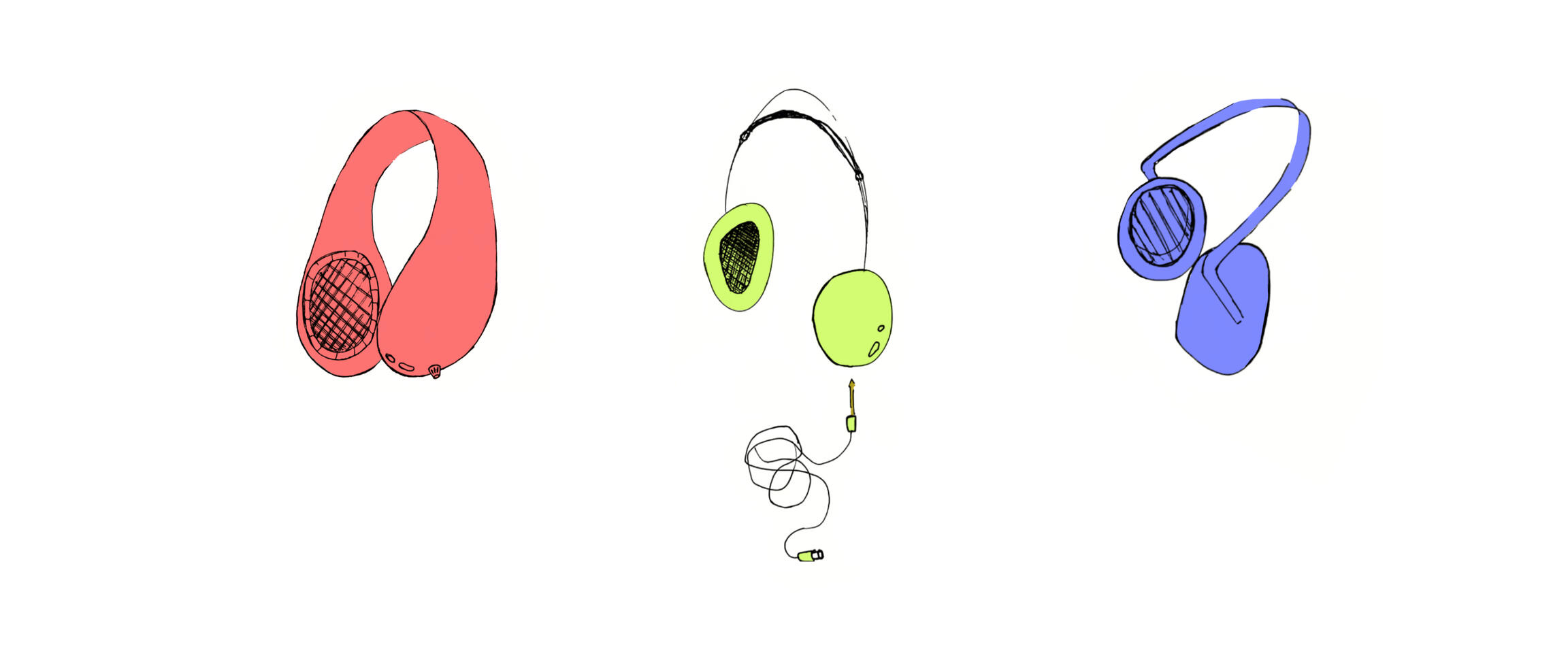
I singled out three designs that I evaluated. The shapes and traits served as inspiration for further exploration of headphone design.
Ideas for desirable aspects and possible directions that influenced the final design of Modu. Pinpointing what's needed while avoiding gimmicks that turn into structural liabilities.
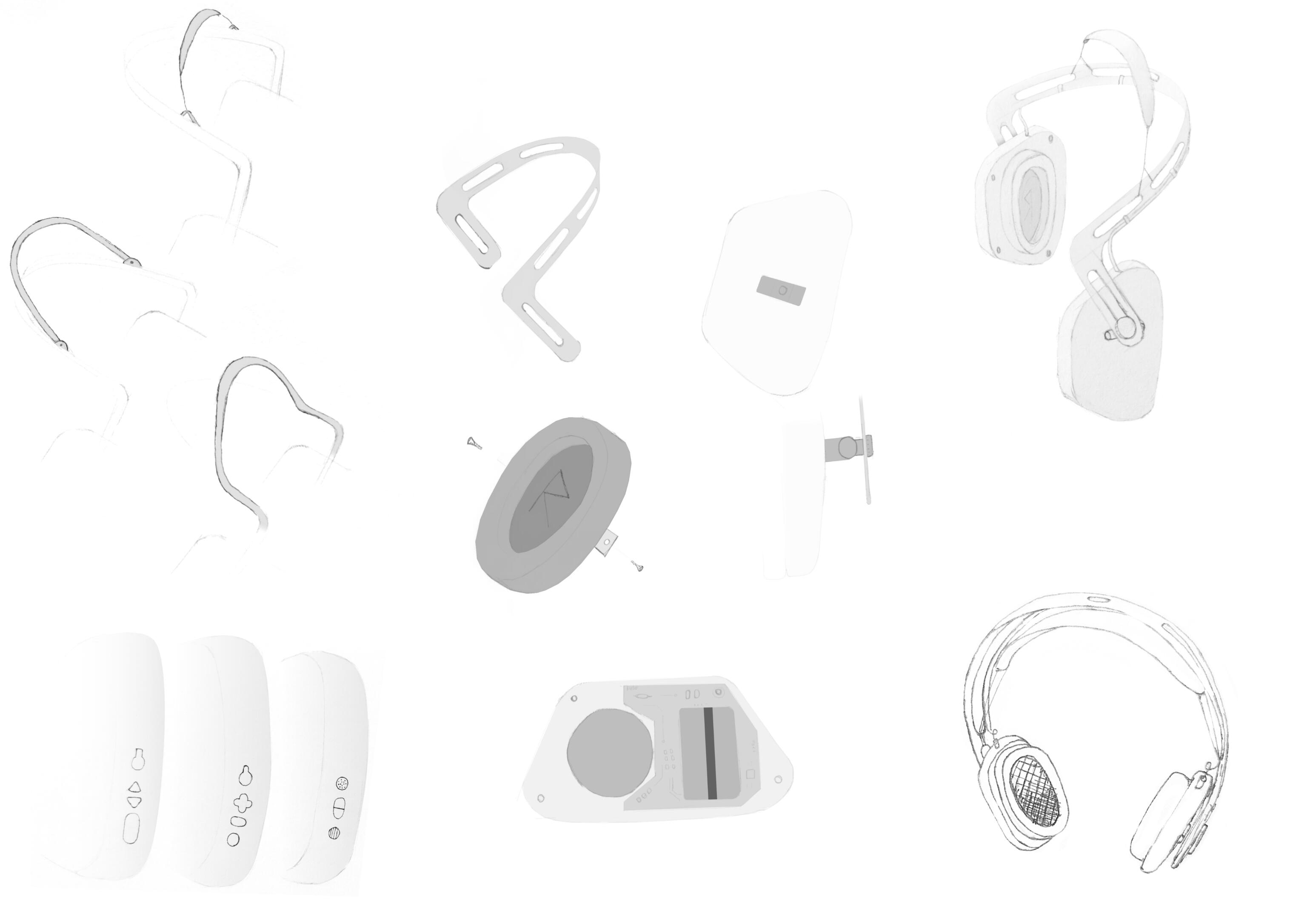
Fixation on creating an adaptable frame led to an oversight when drafting. The design pictured below could be problematic for chairs with headrests. When I caught this oversight, I could iterate on a suitable frame design that respects the user's agency better.
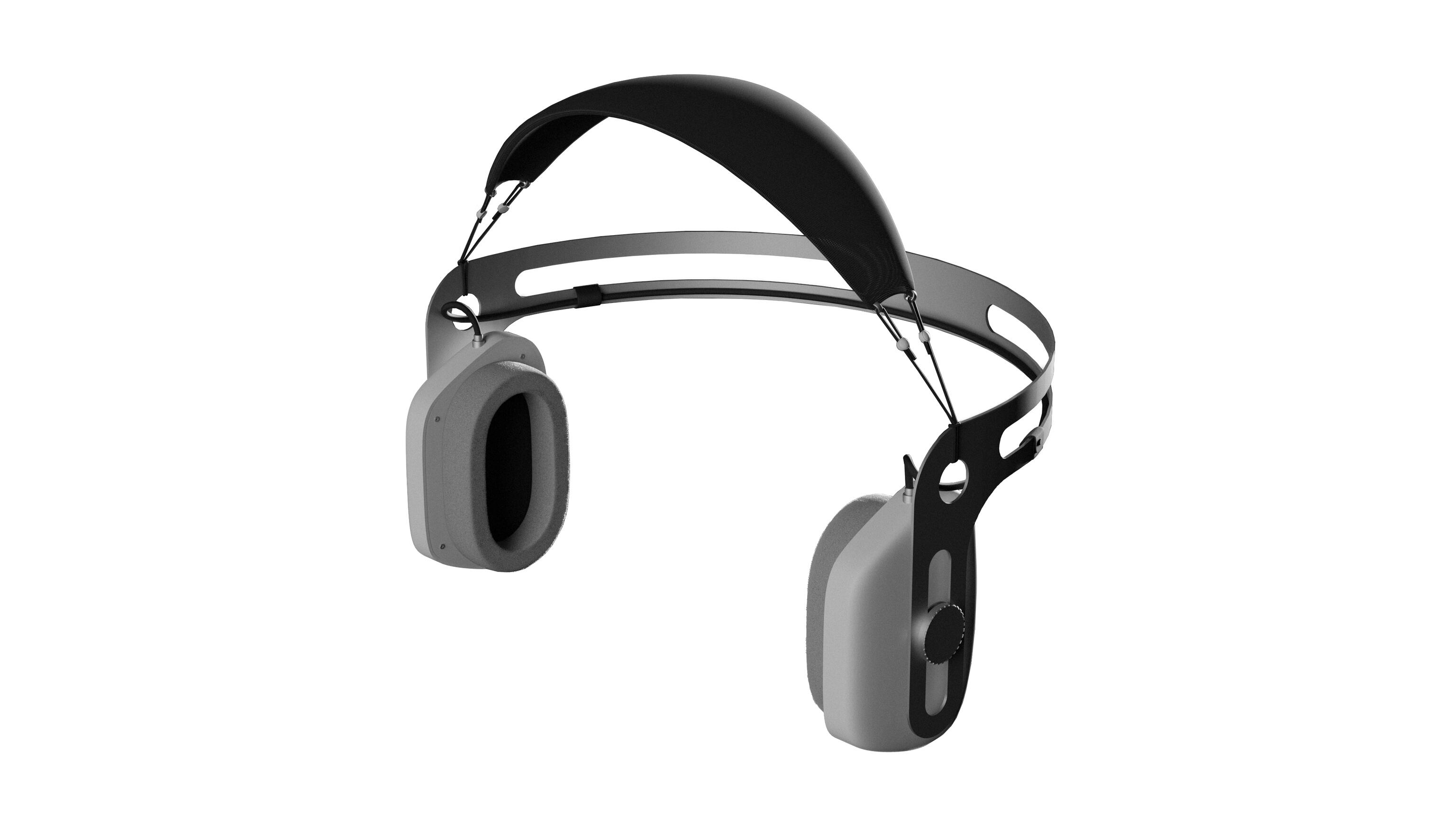
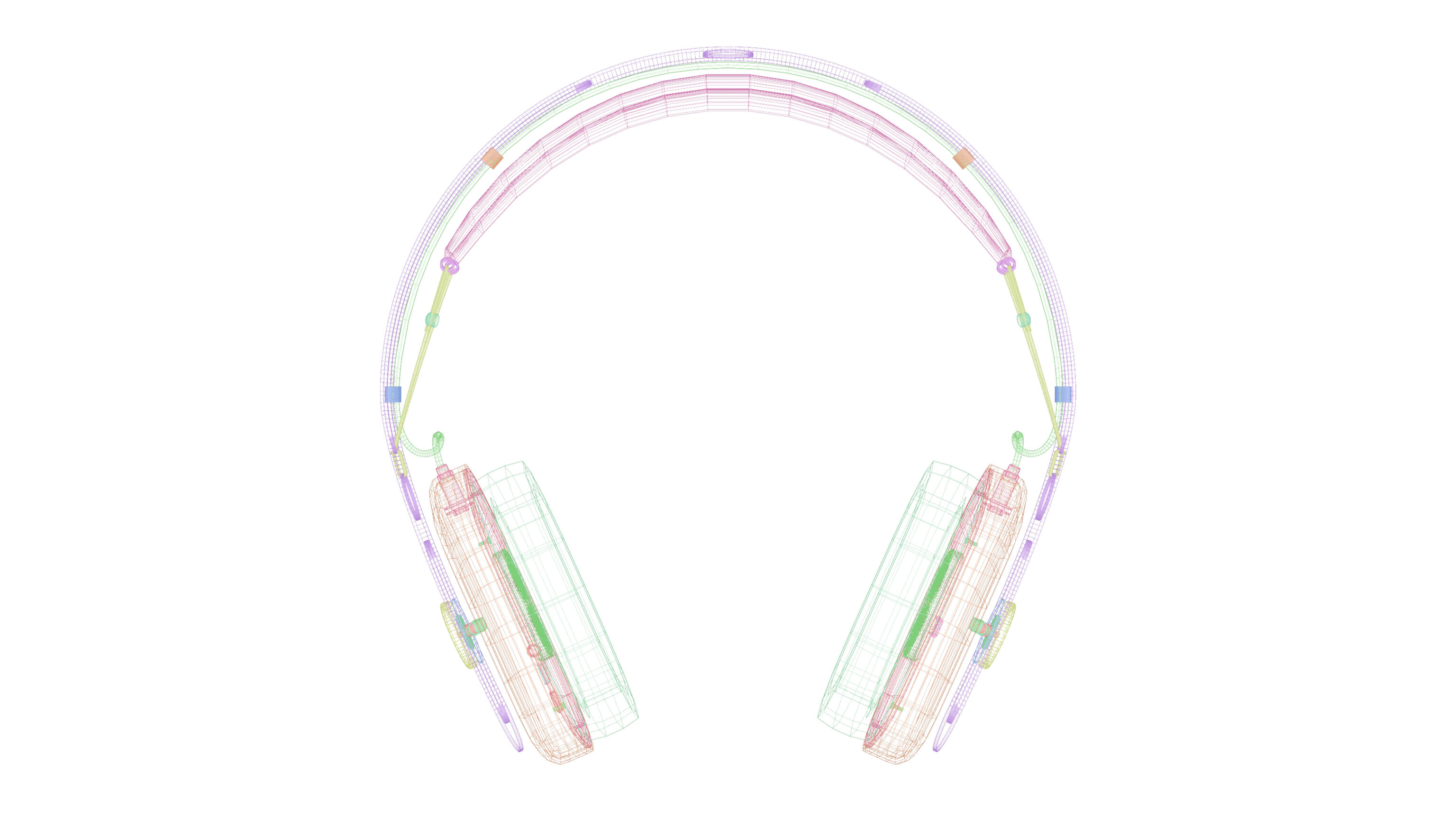
I used subdivision modeling in combination with curves to create the 3D model.
I modeled, shaded, lit and rendered Modu in Blender.
Odor
Saving both the planet and your wallet.
03
Background
2024
Solo project
1 Week
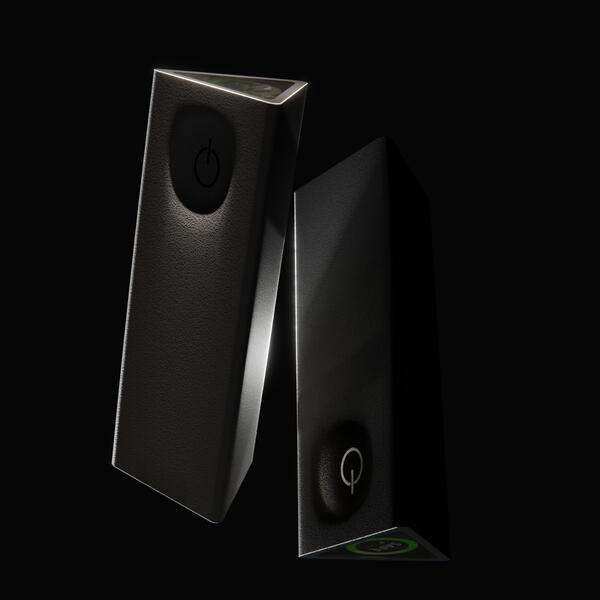
Research in creating an electronic nose has been making strides, and while it is still in a prototype stage we are getting closer to a breakthrough. Utilizing a combination of gas sensor arrays and AI, we can detect organic compounds released from spoiled food.Objective: Designing the chassis of a device that utilizes particles in the air to detect food spoilage. Enabling the user to make an informed decision about whether they should toss the food or if it is safe to consume.
The Concept
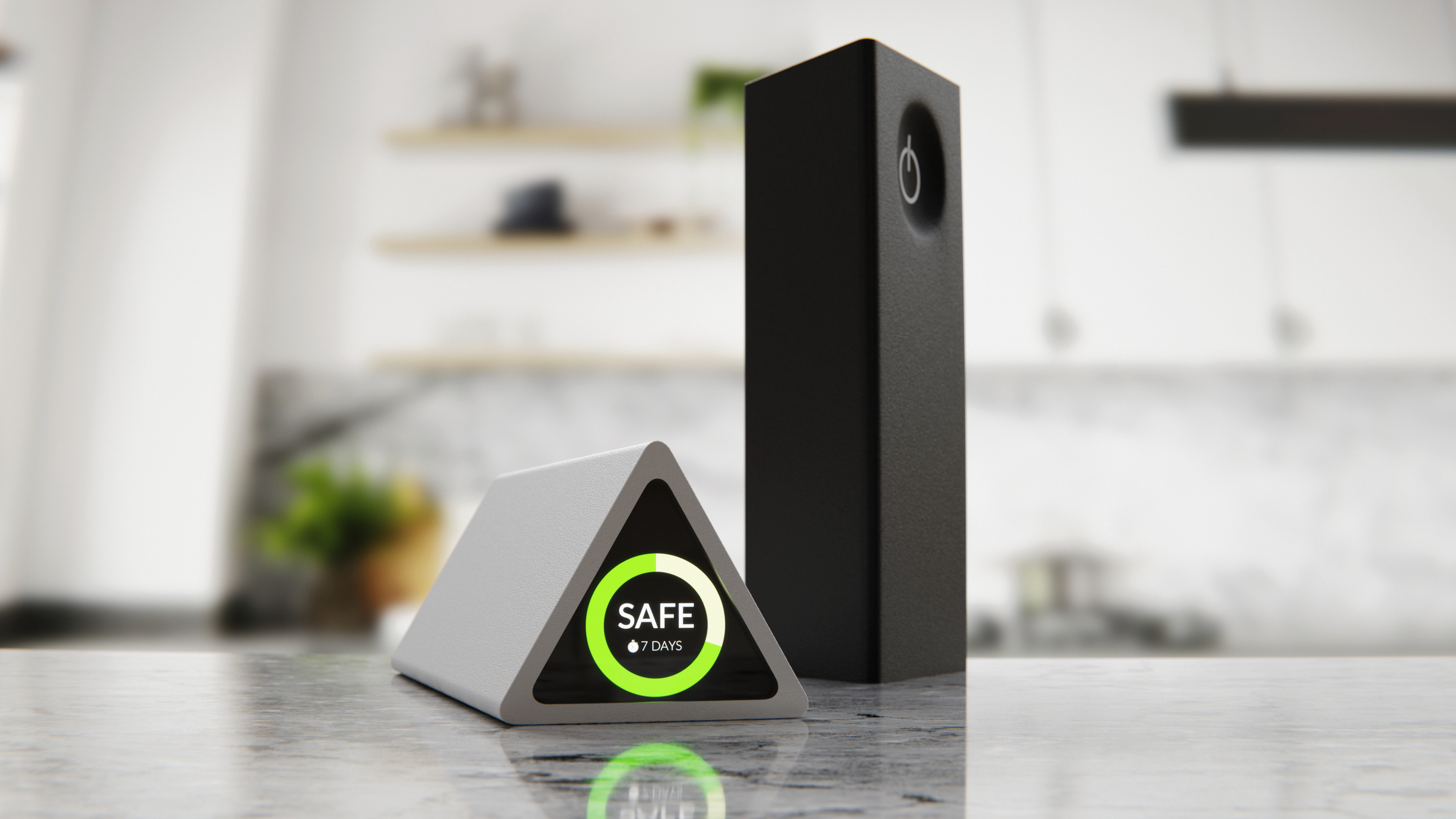
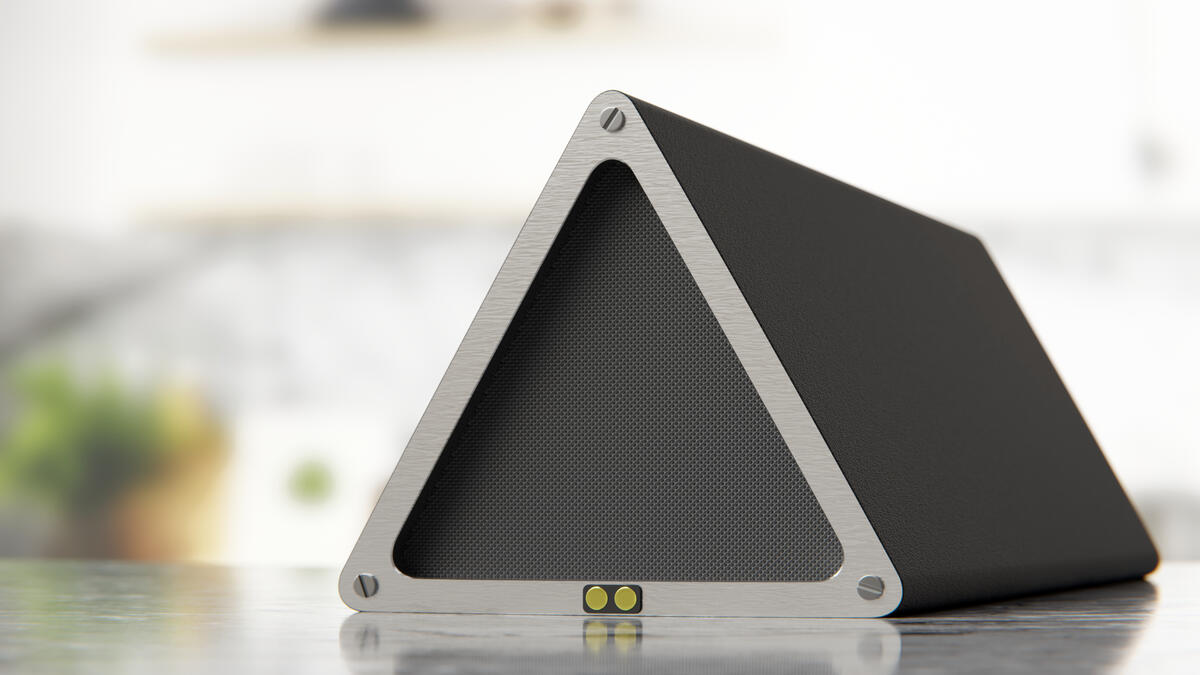
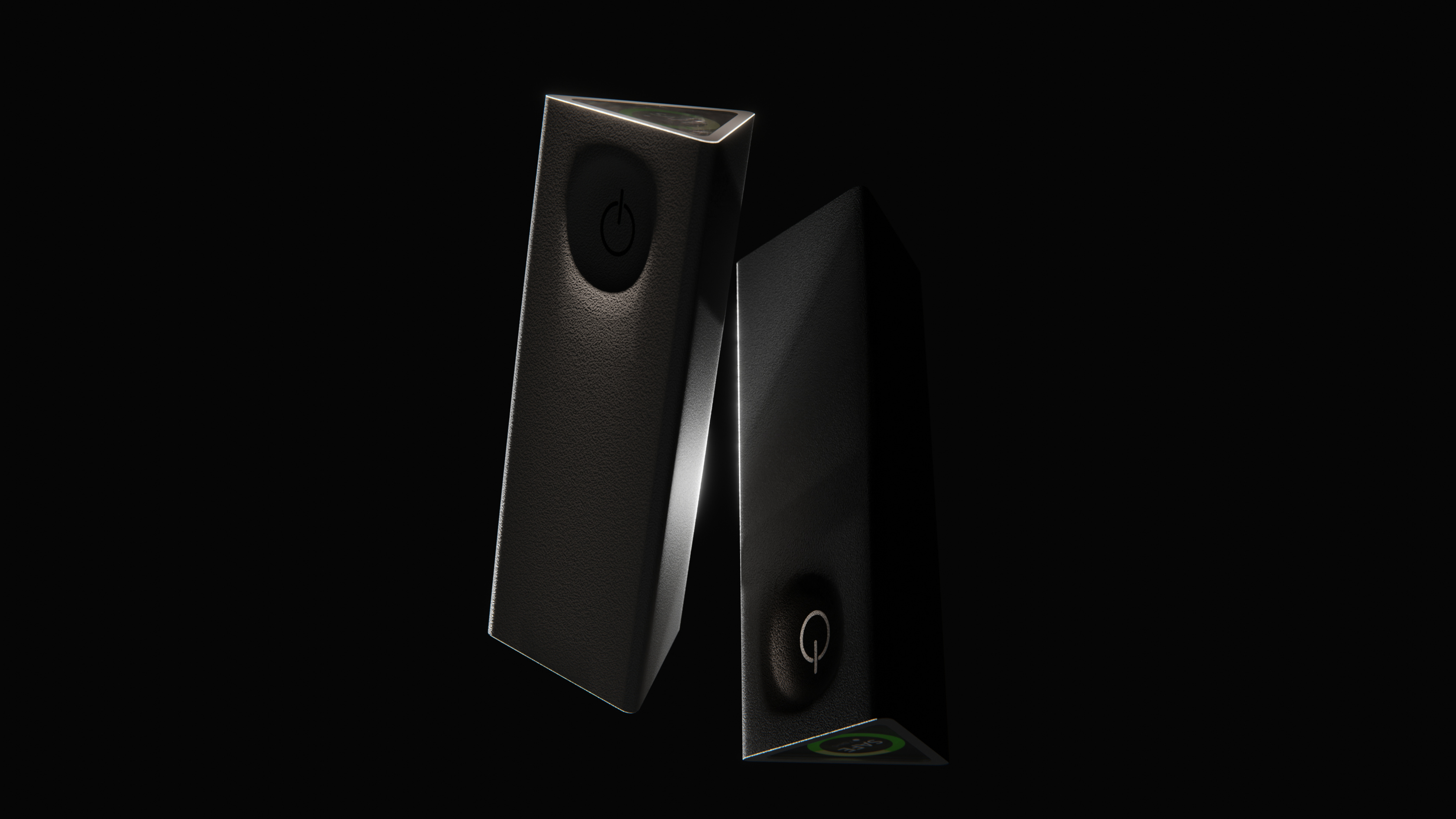
The project resulted in a sleek and modern device utilizing a combination of aluminium, rubber and glass. I chose these materials to ensure the product will last through the turmoil of a kitchen and always be easy to grip and use, no matter if your hands are dry or not.
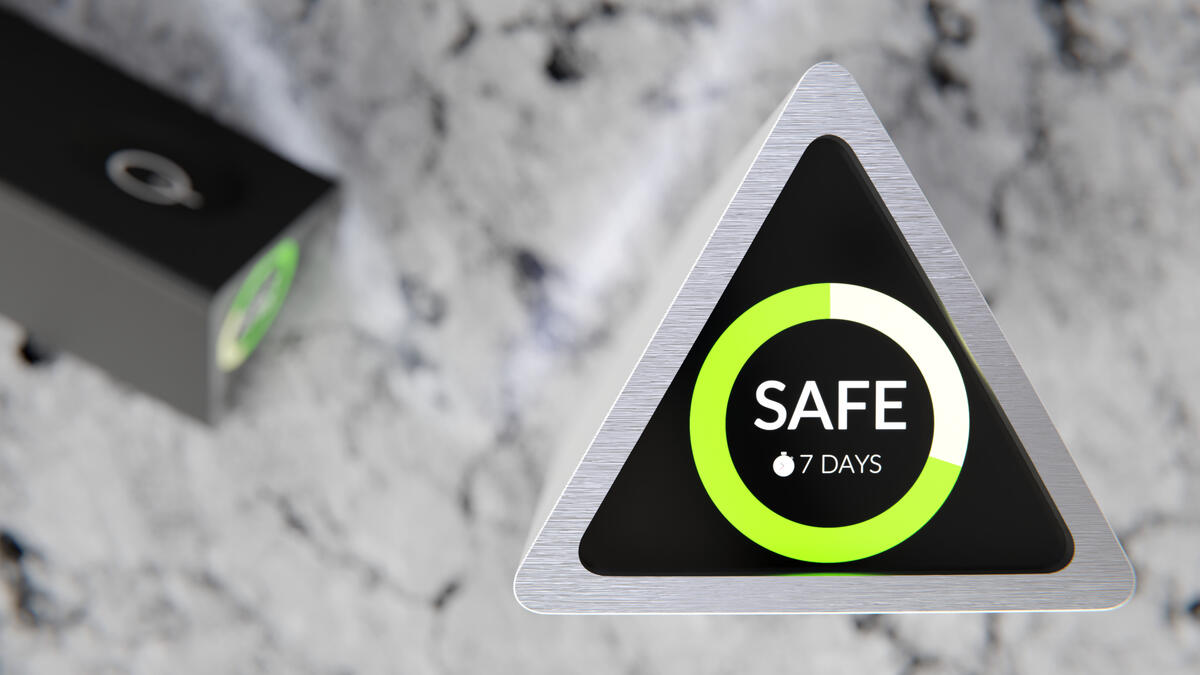
Ease of use
After a button press Odor scans your food for decay, it analyzes the data, then reports back with its findings in an easily digestible UI format. Enabling the user to make an informed decision regarding consumption.
Built to endure
Odor aims to meet the demands of even its most heavy-handed users. An aluminium frame keeps Odor light while remaining rugged. The hydrophobic mesh near the air intake keeps debris and water at bay, making Odor splashproof.
Process
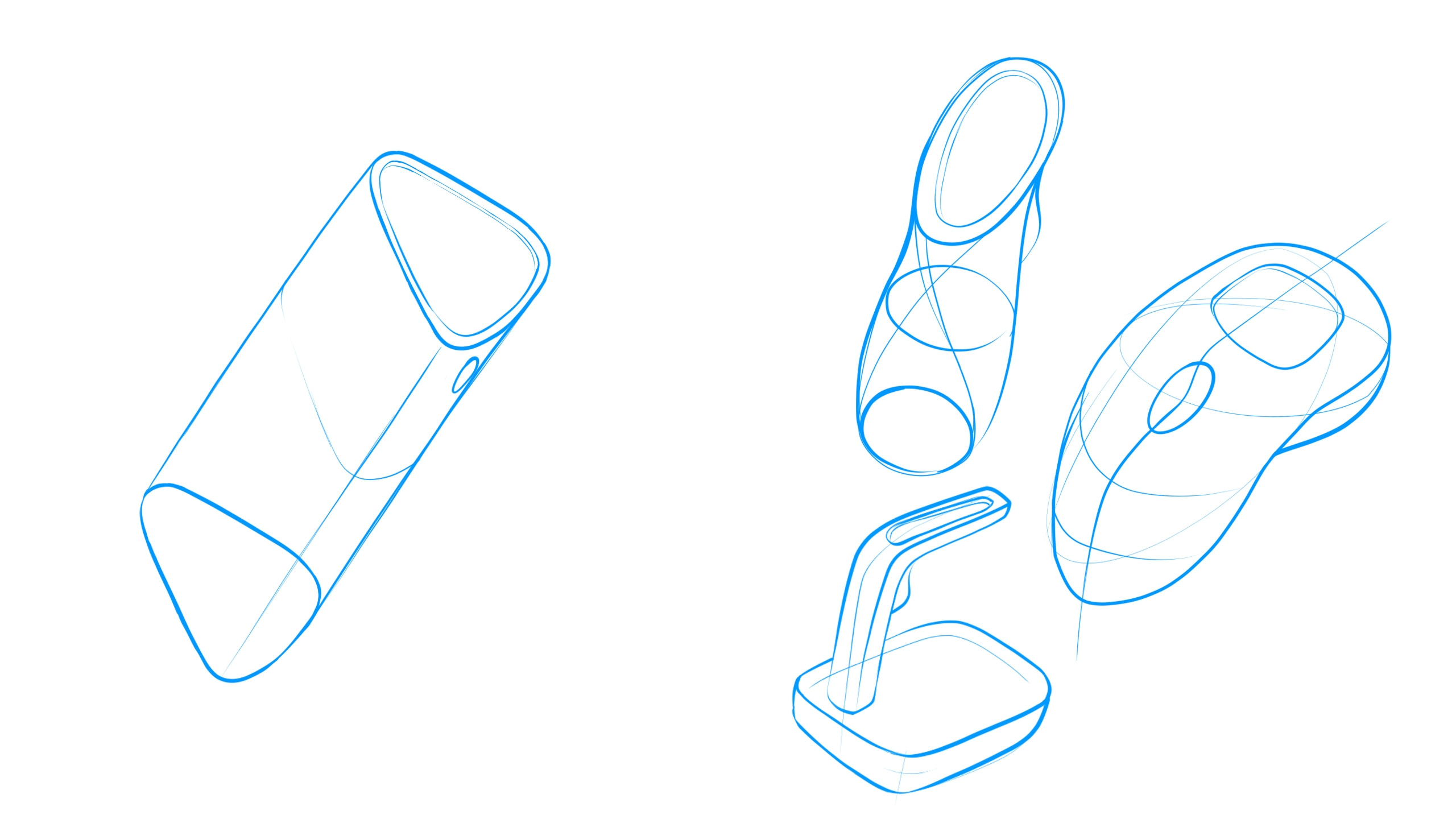
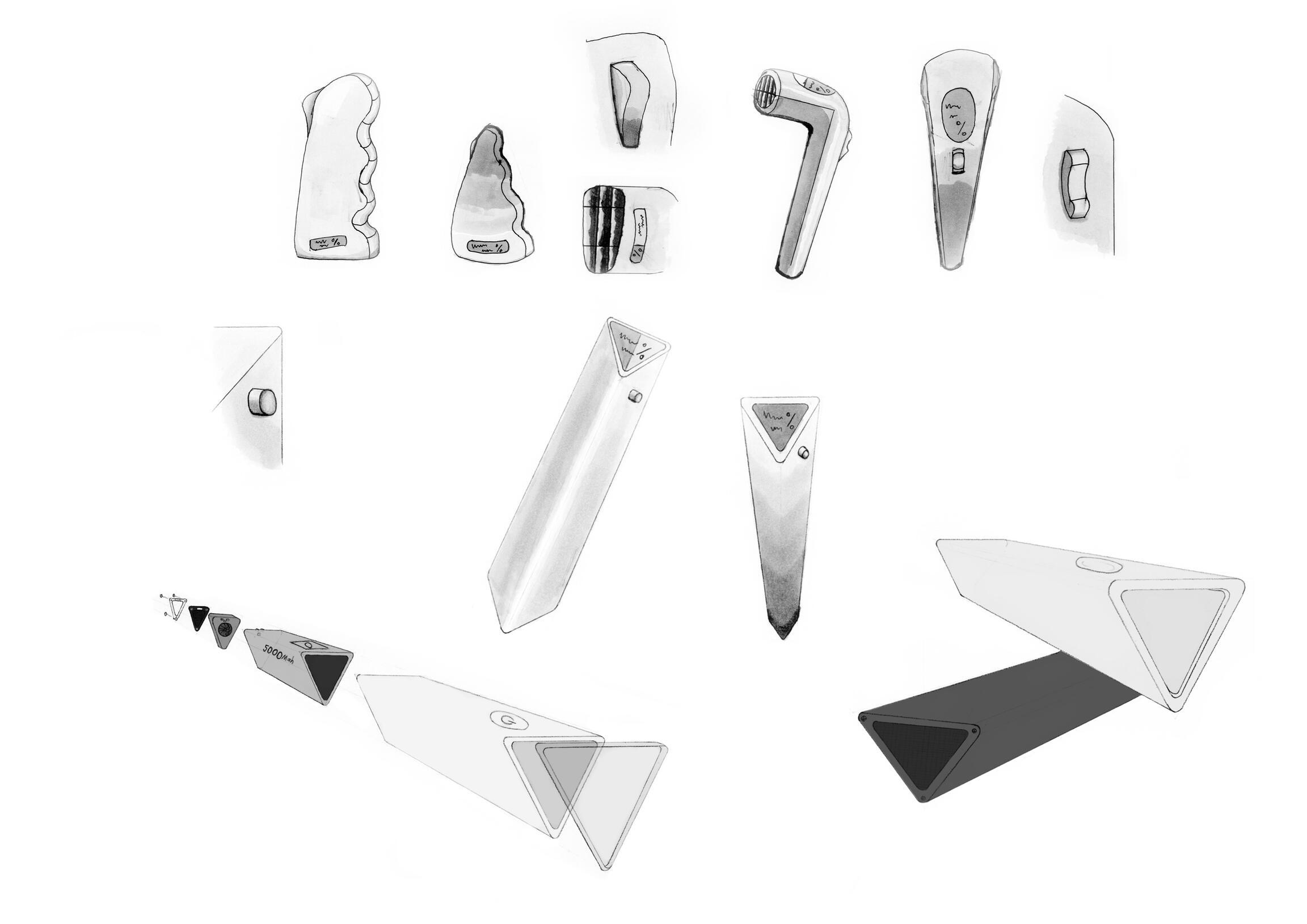
Brainstorming possible directions for the concept. Thinking about handling, UI and materials, while also considering how hardware will mesh with the chassis.
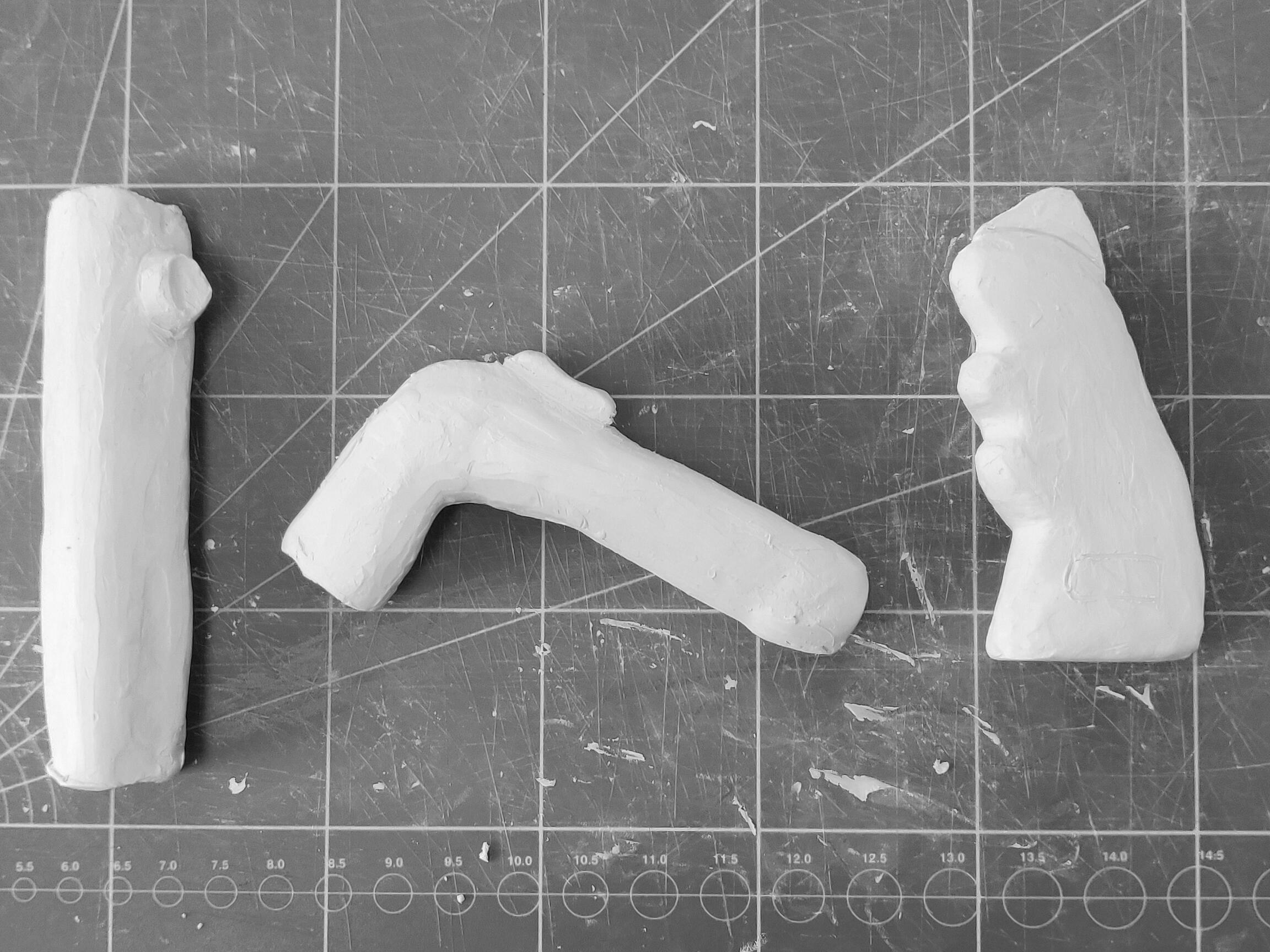
Exploring form and ergonomics with automotive modeling clay. This helps with further development down the line when shaping the product.
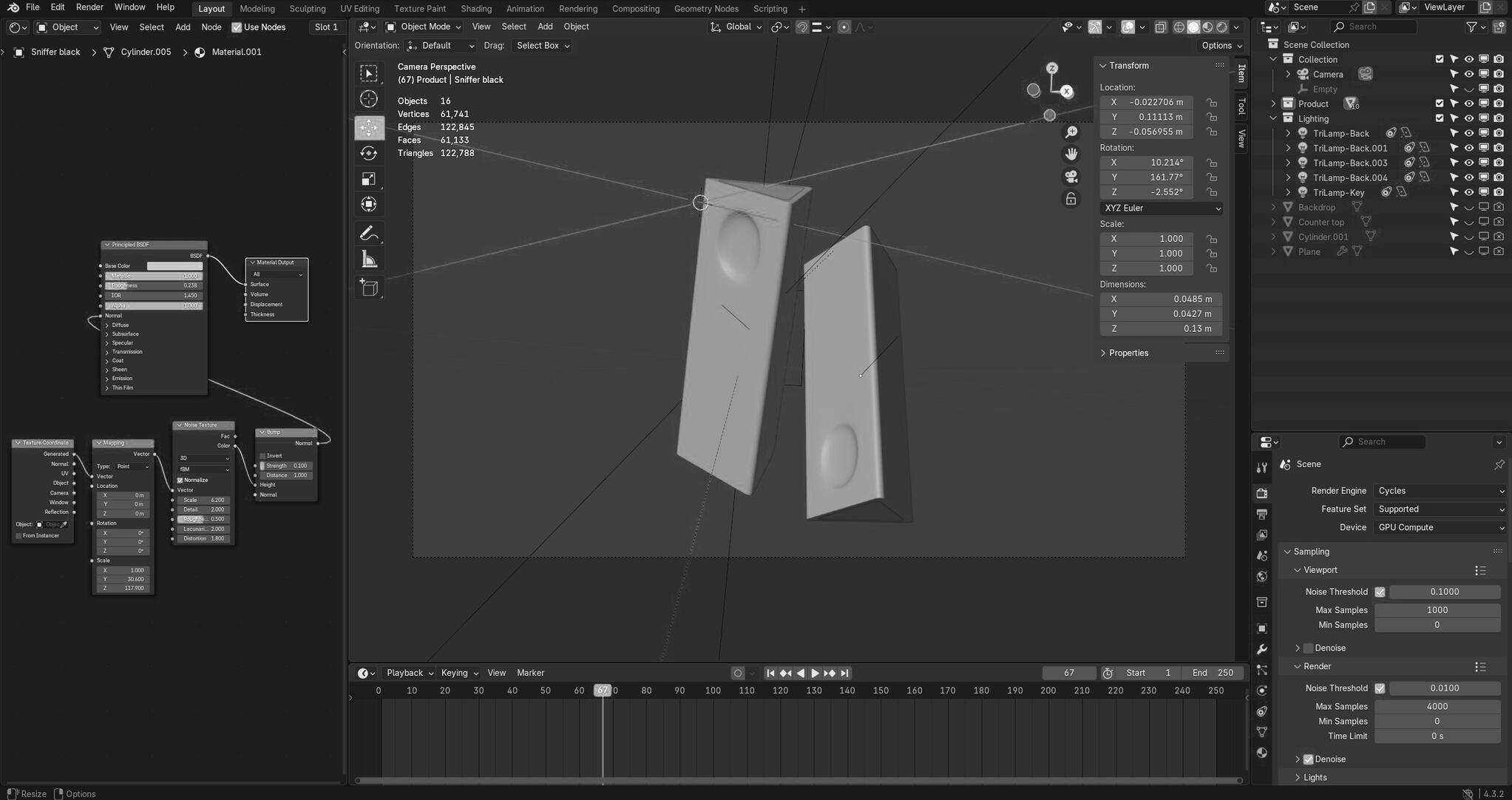
Modelling and rendering the concept.
Wool pack
Cutting down on plastic packaging.
04
Background
2023
Hybrid project
3 Weeks
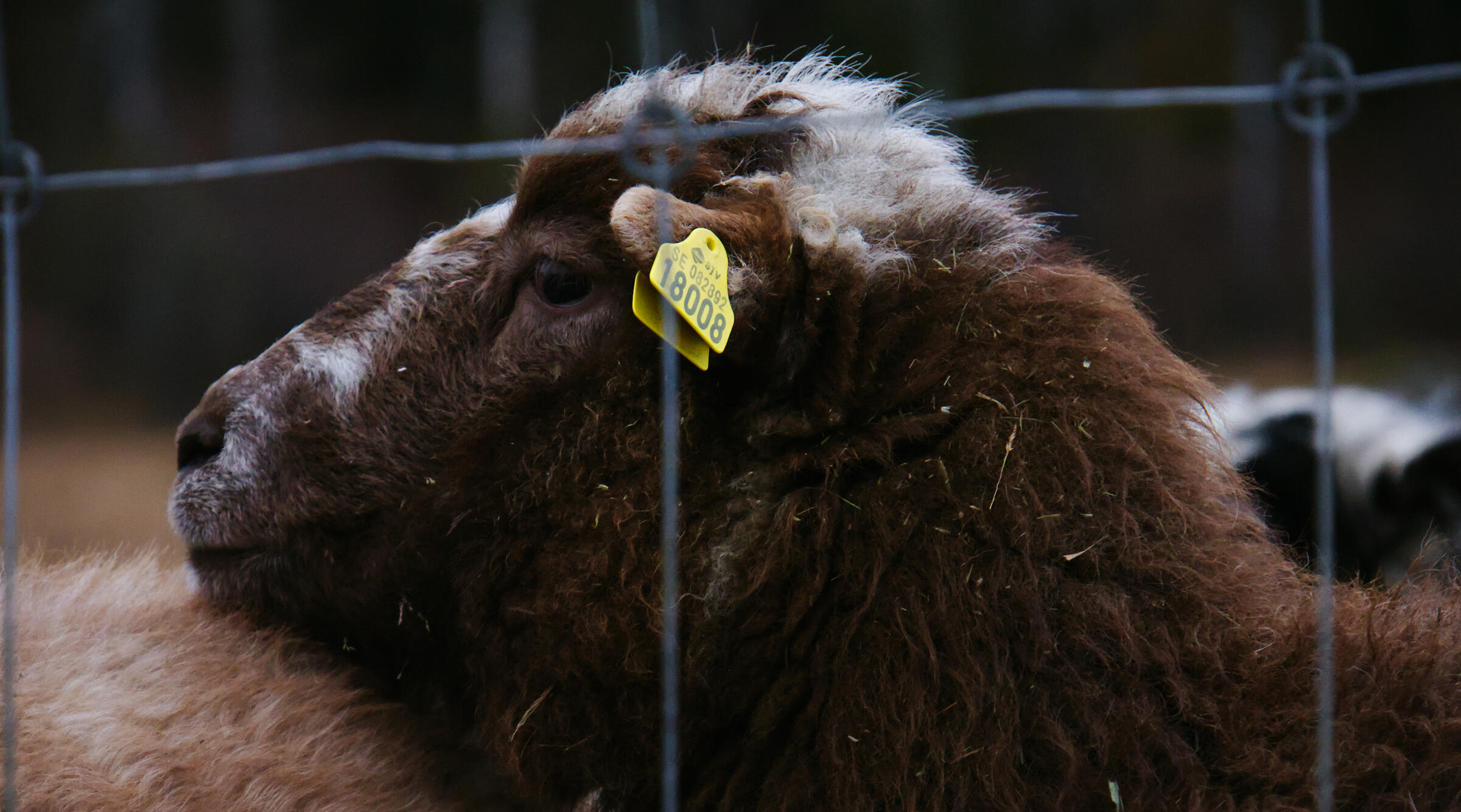
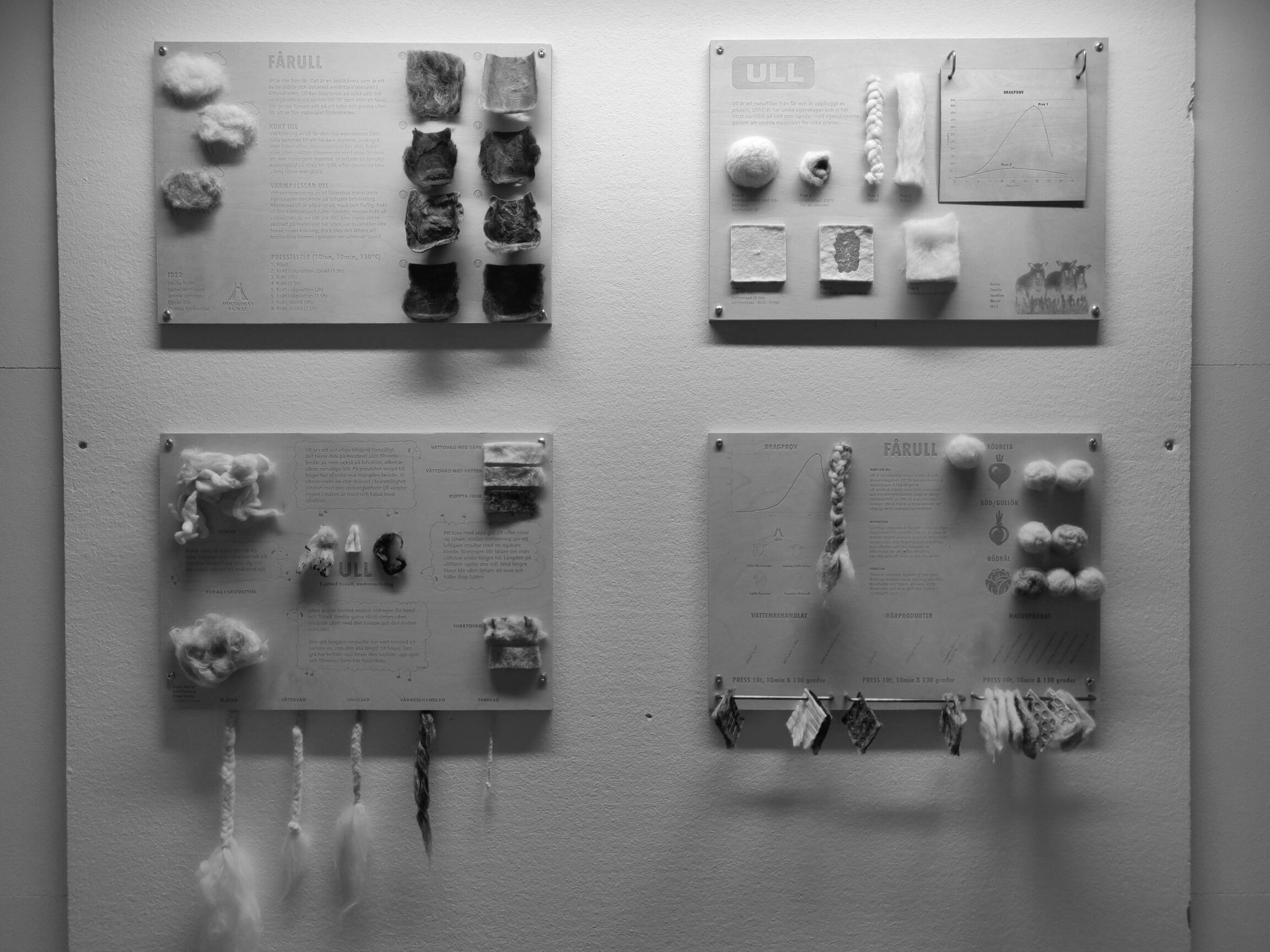
Low-grade wool is a byproduct of sheep raised for meat. It can't be used for clothes because of the differing quality of the subpar wool fibers and is therefore often burned as waste.Objective: Conduct a material study exploring wool's properties in groups before branching off and utilizing the findings to individually design a solution for how we can utilize low-grade wool.
The Concept
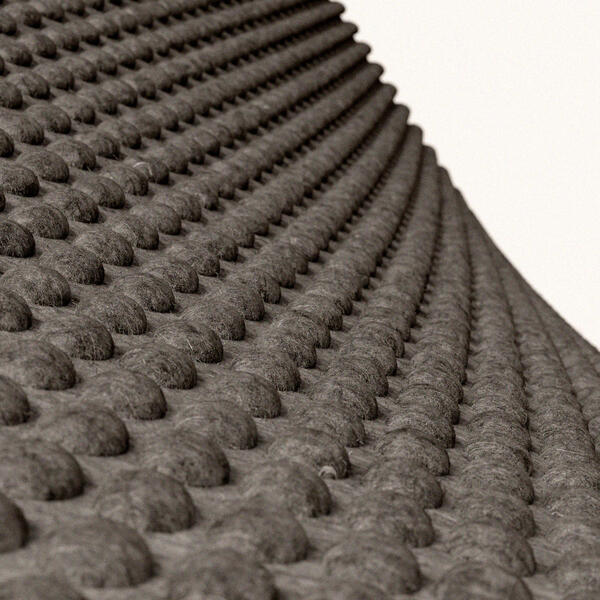
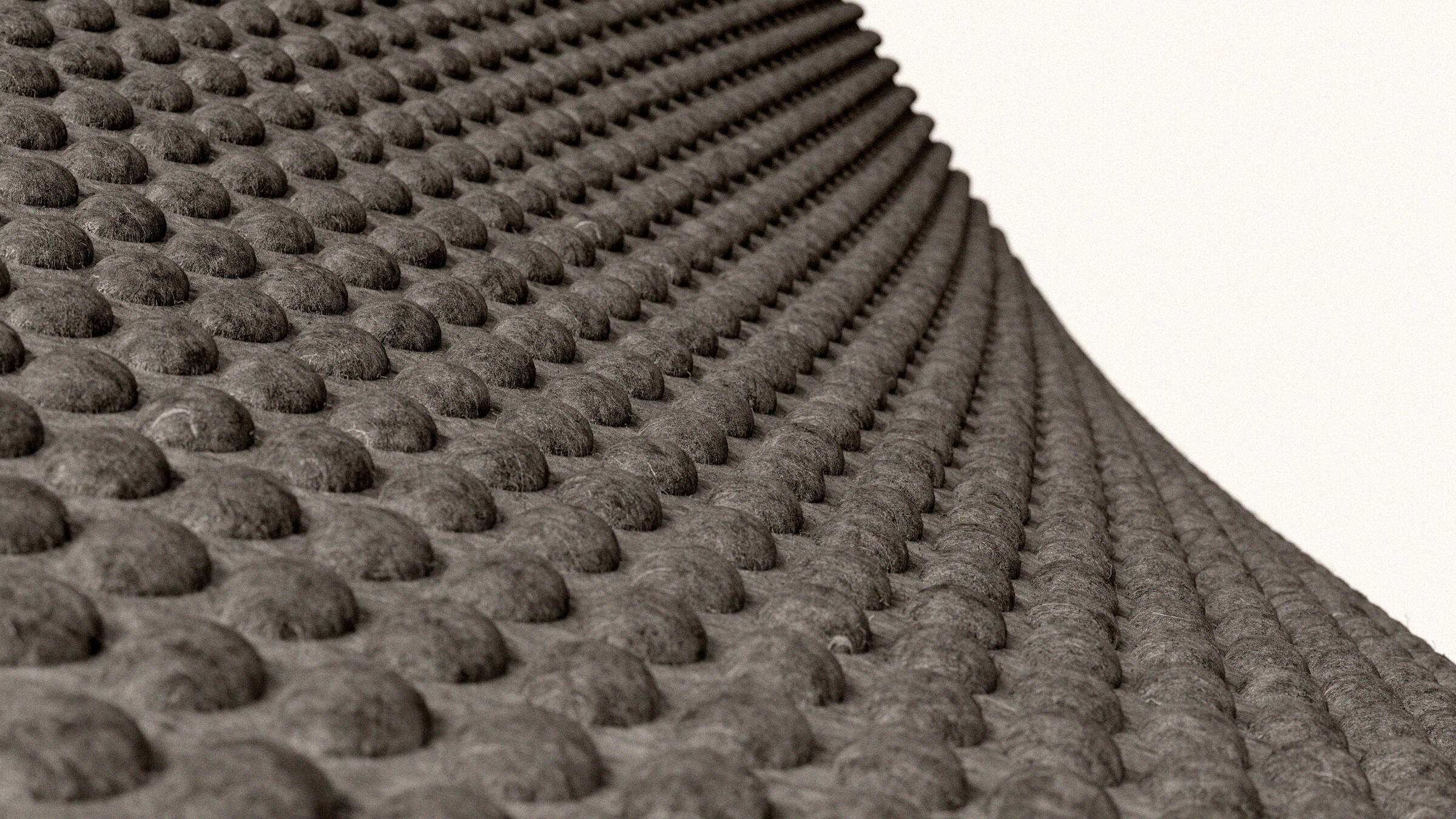
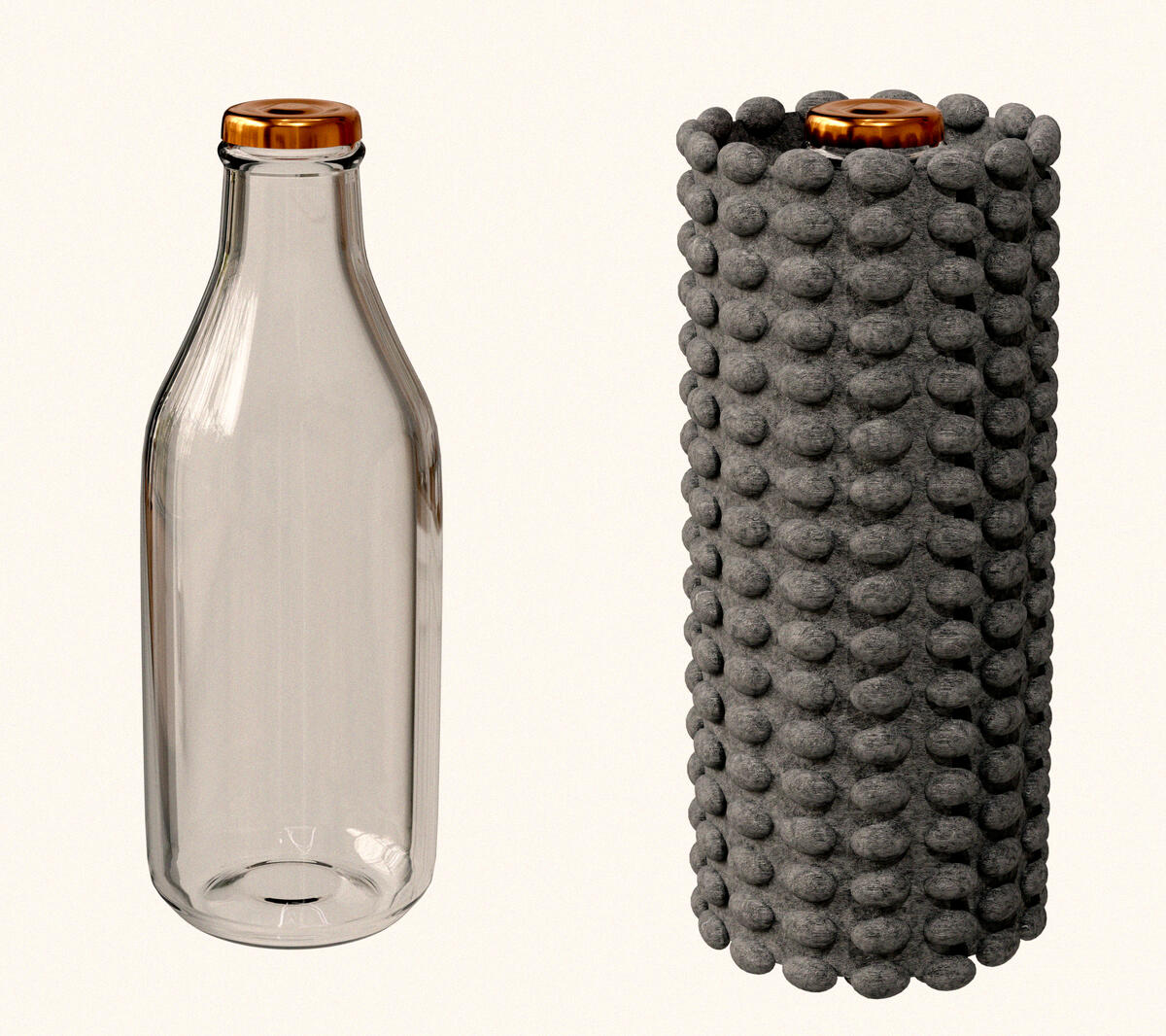
The project resulted in a packaging material I call Wool pack. It has all the benefits of wool in a bubble wrap format. Although it mimics a traditional bubble wrap, it has properties that could outshine it depending on what you want to package.
Why Wool pack?
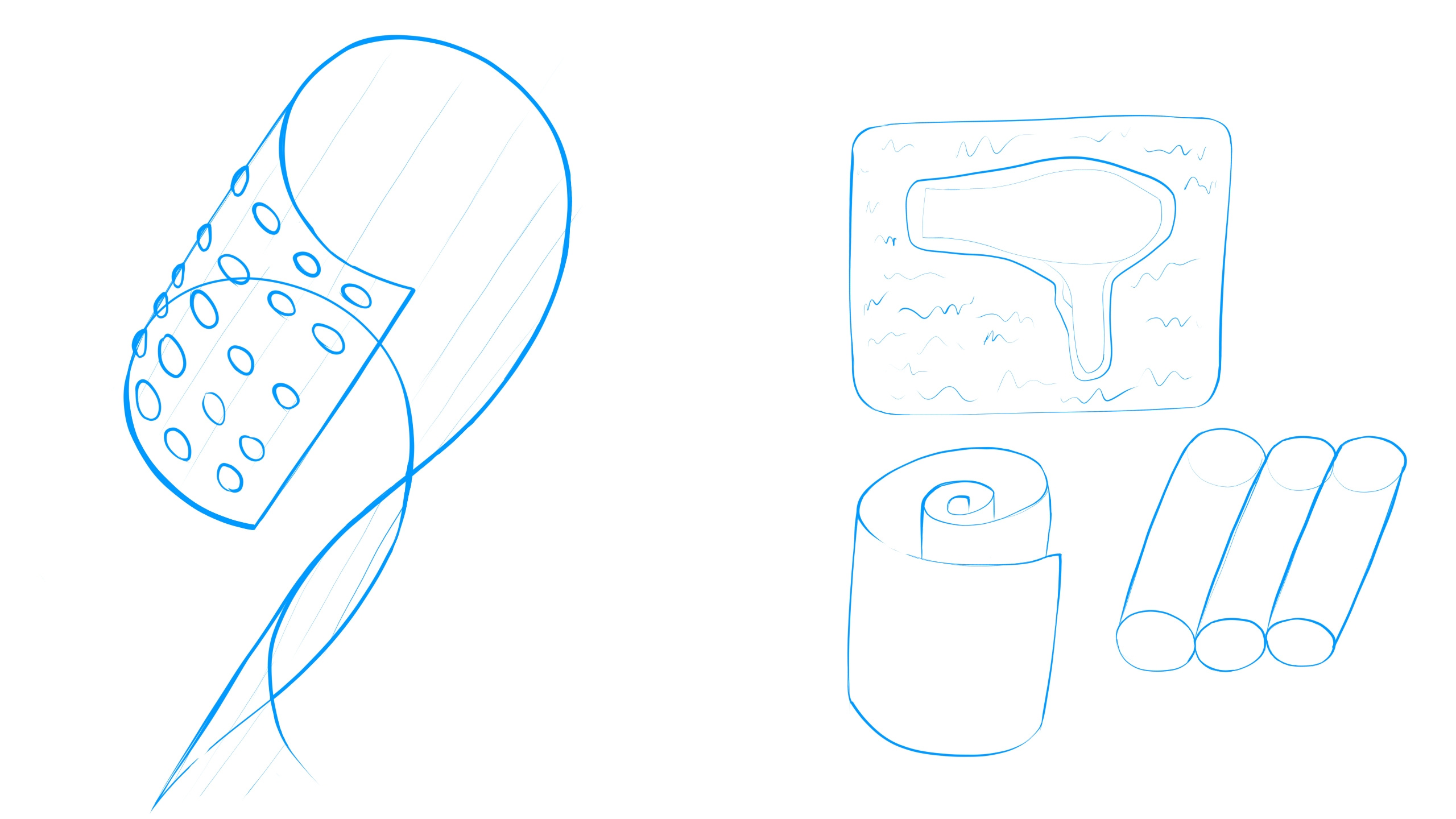
The environmental benefits of taking care of waste products while also eliminating plastics in packaging. Possible packaging use cases include ceramics, tech and food.
Superior qualities
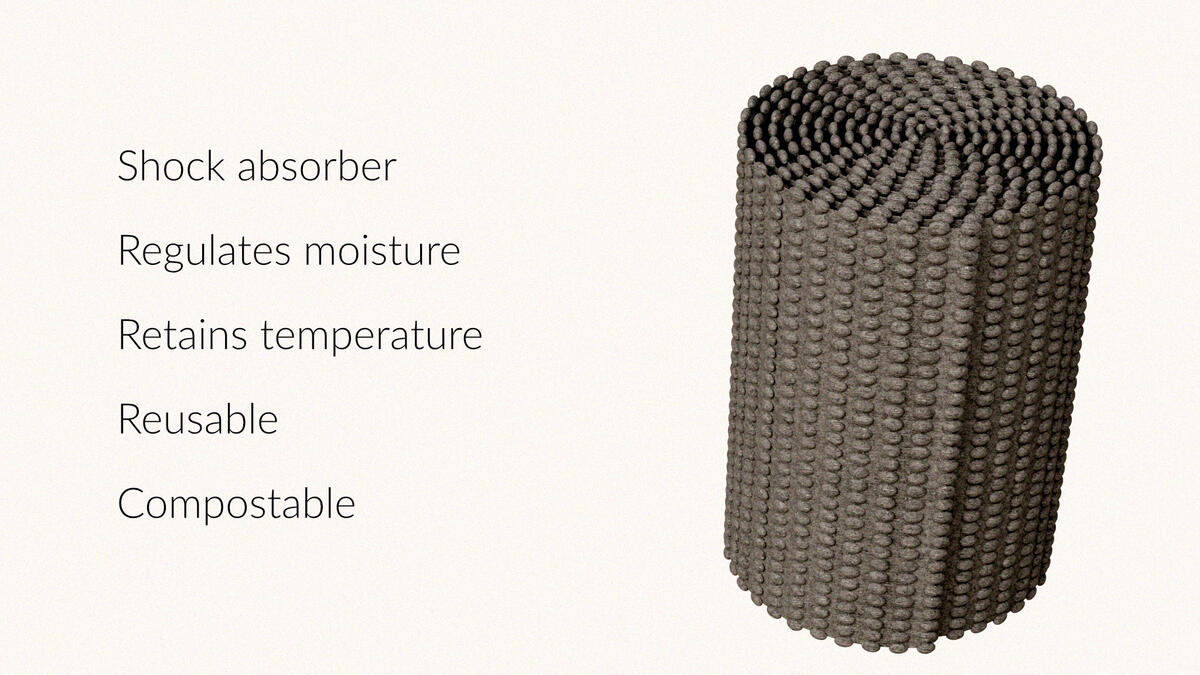
Wool possesses unique properties, making it a desirable shipping medium. These qualities make Wool pack the superior alternative in use cases where certain conditions must be met.
Process
We tested the properties of the wool by exposing it to harsh conditions. Freezing temperature, open flames, boiling water with differing solvents and extreme compressionAfterwards documenting findings and brainstorming use cases for the unique properties of the material. Then, continuing further ideation and development by ourselves.
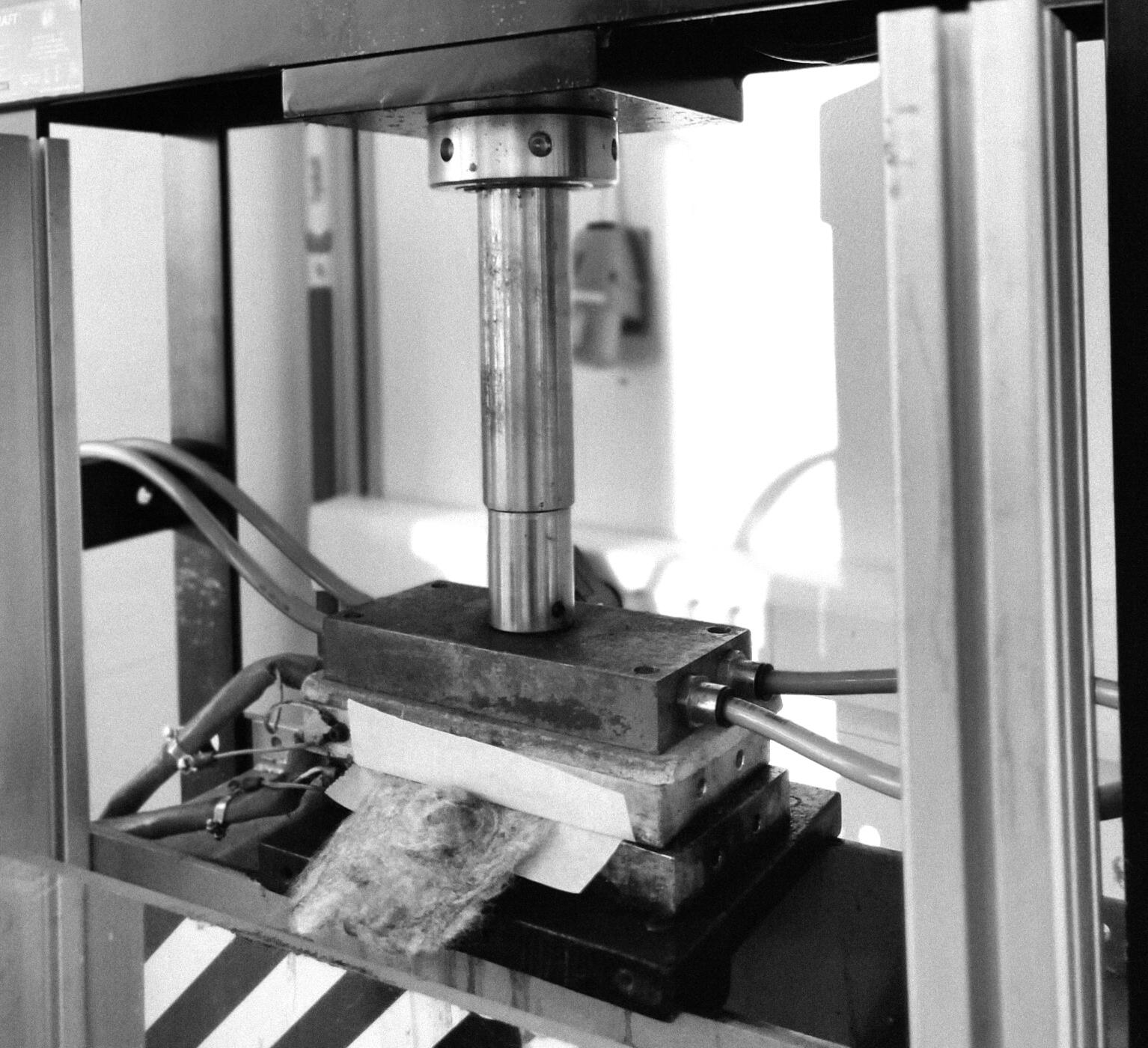
Making a proof of concept with the help of a heated hydraulic press and low-grade wool.
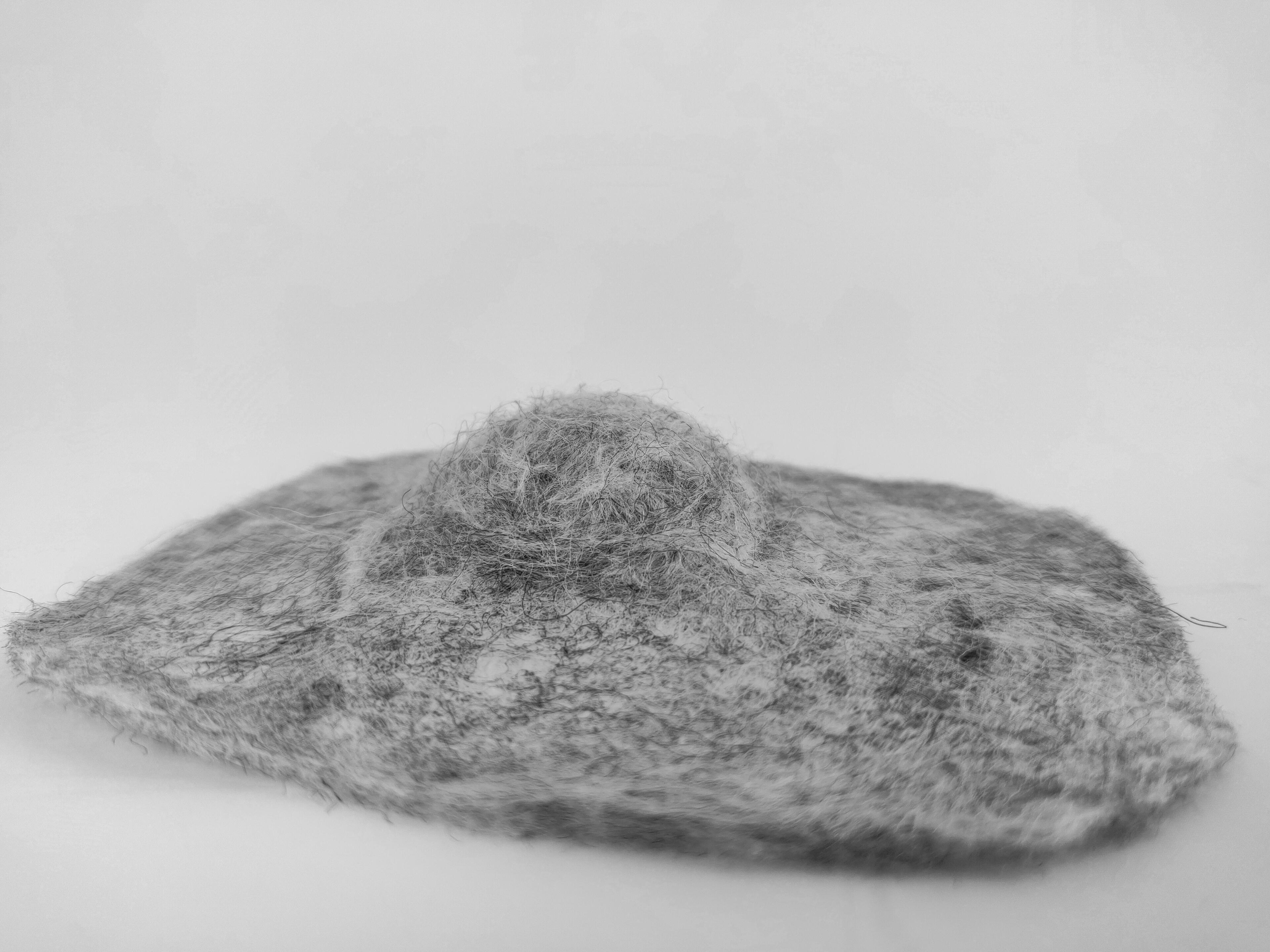
The test came out really promising, bouncy and cushiony, yet bendable in the compacted area. Showing the idea could most likely be taken further and fully developed into a finished product.
Skarva
Modularity for everyone.
Background
2024
Group Project
4 Weeks
Diversity-driven design is a development process in which you form your basis around product requirements with the most demanding user in mind.Objective: Design an inclusive solution for a public space of your choosing, while adhering to the diversity-driven design methodology throughout the project.
The Concept
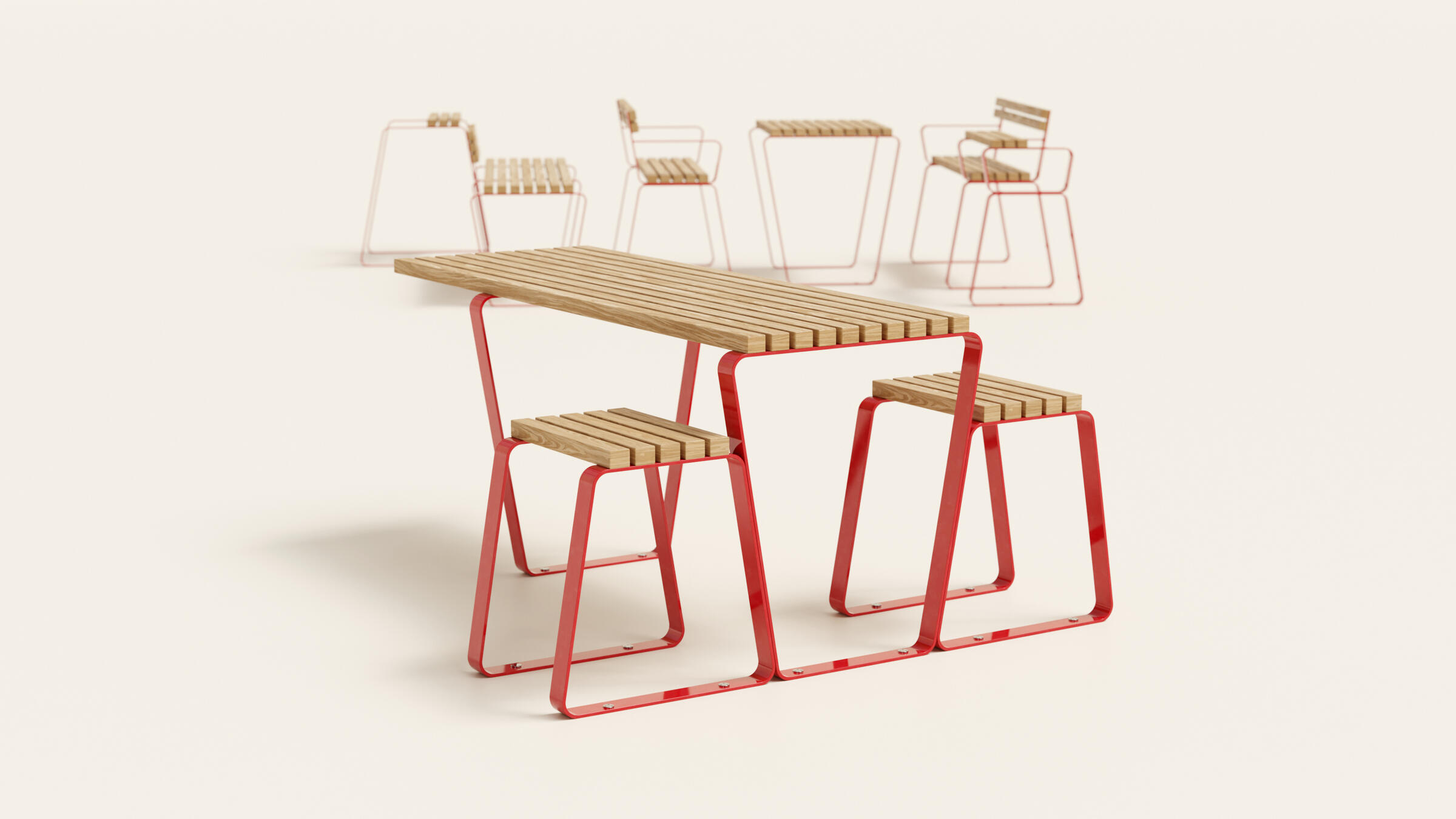
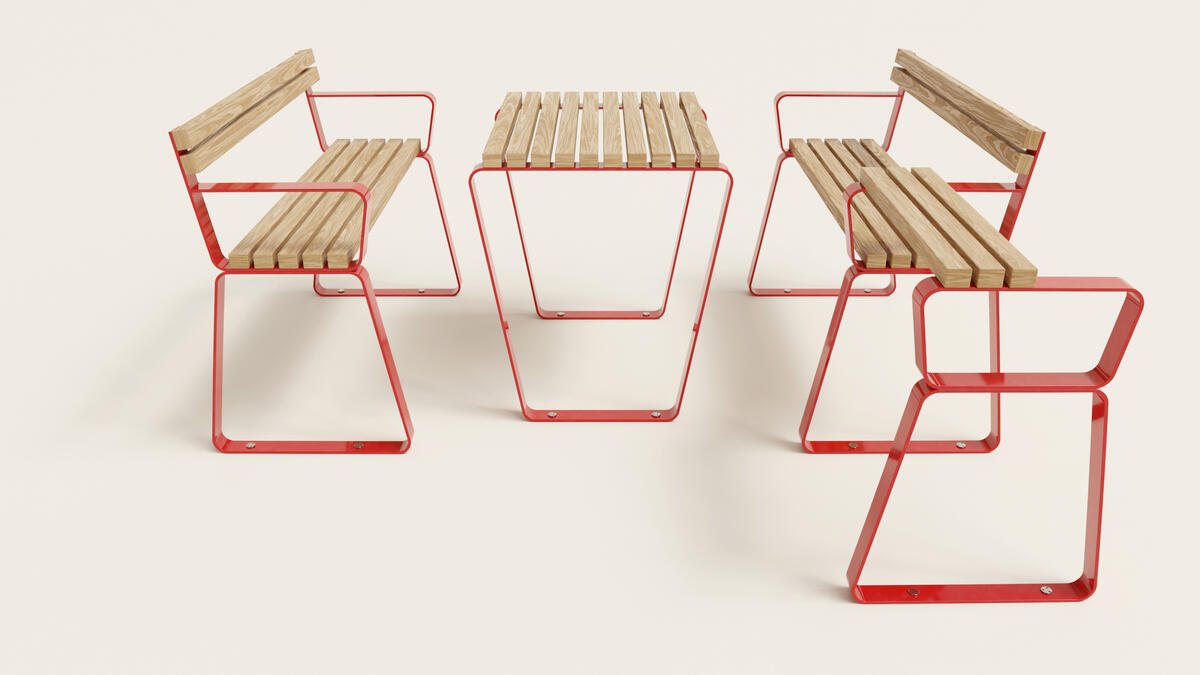
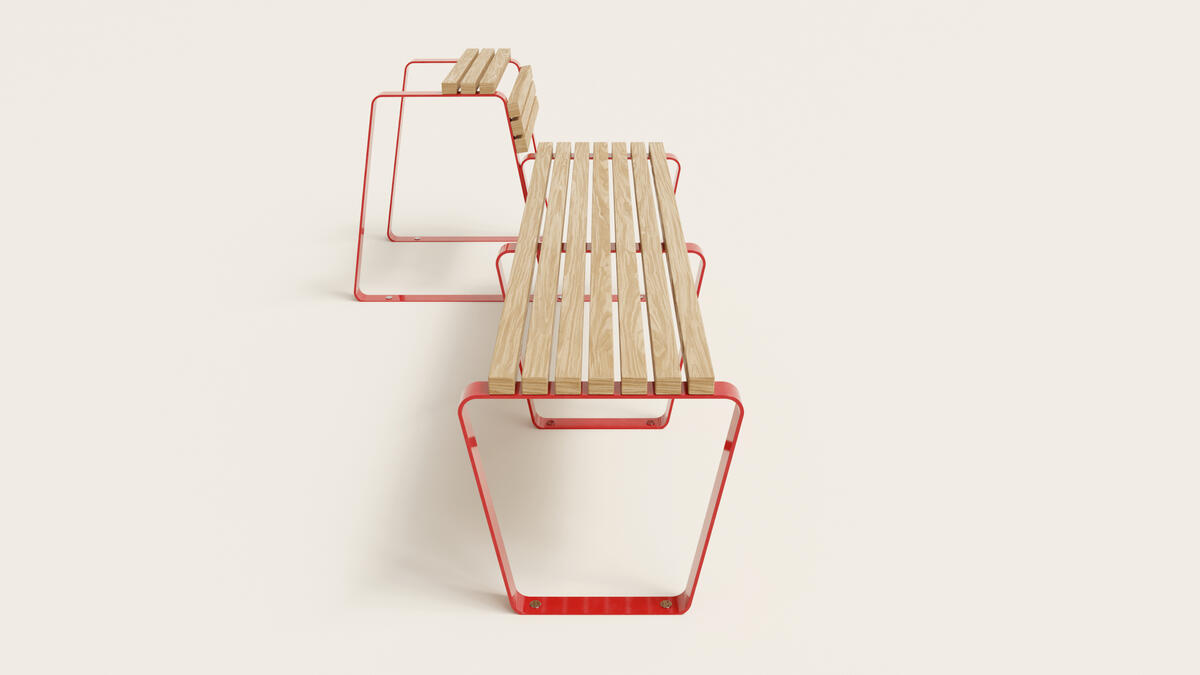
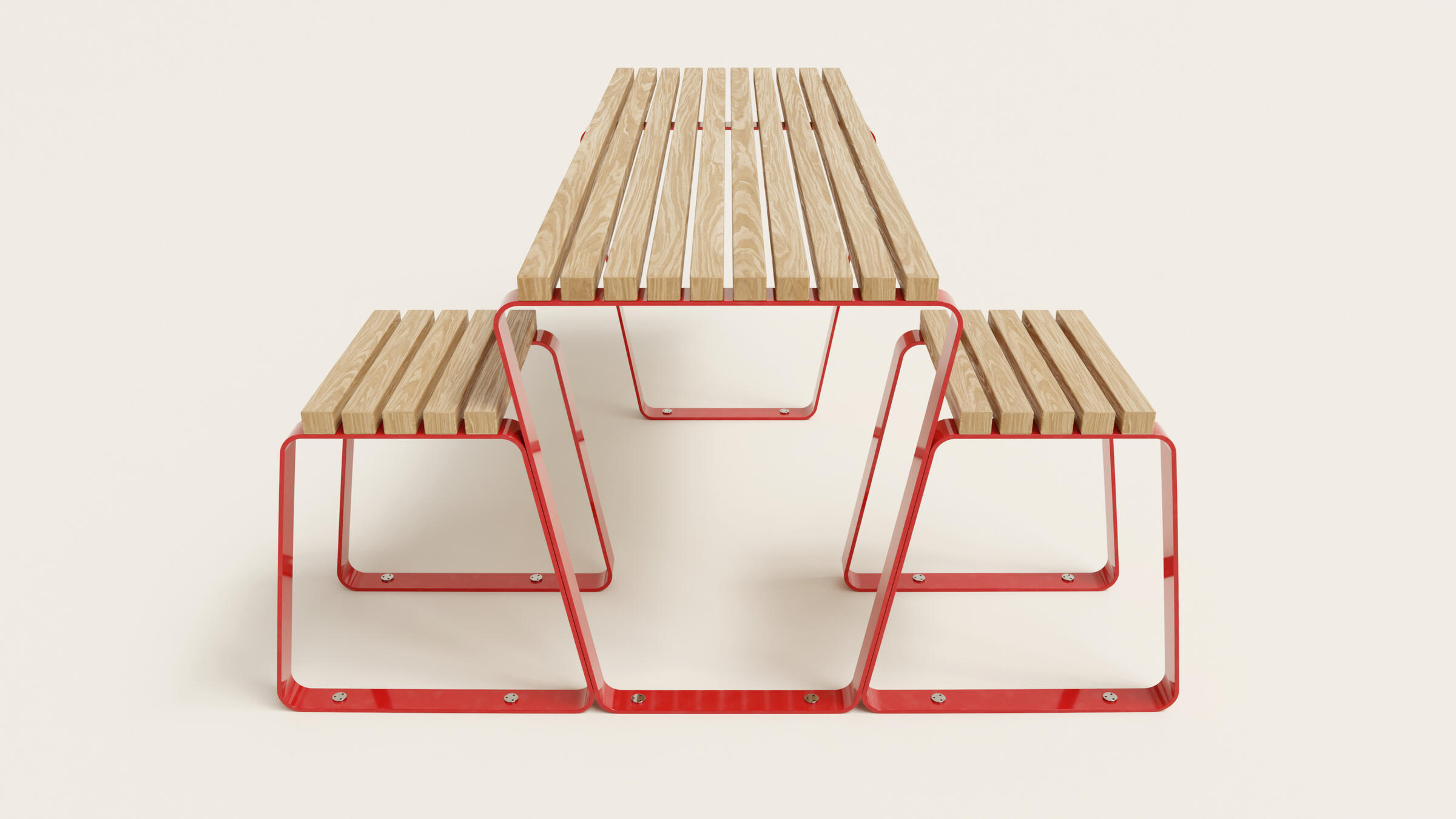
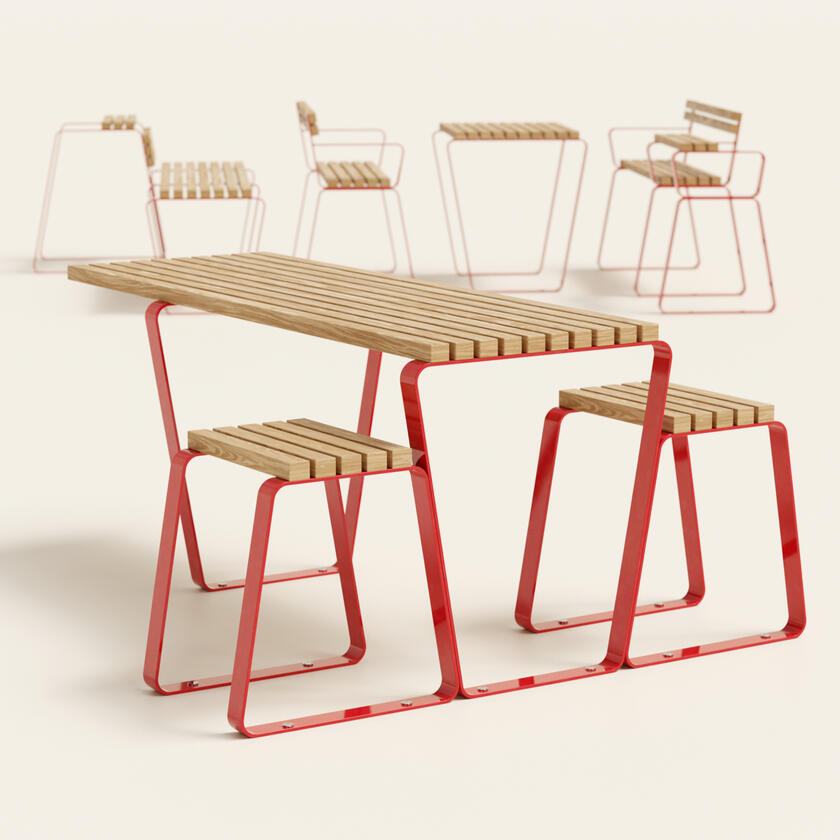
The project resulted in a modular and inclusive furniture set. Skarva can easily be manufactured with very few parts, keeping costs down. While also allowing for customization and options for pre-assembly or on-site assembly, thanks to the nature of the interlocking shapes.
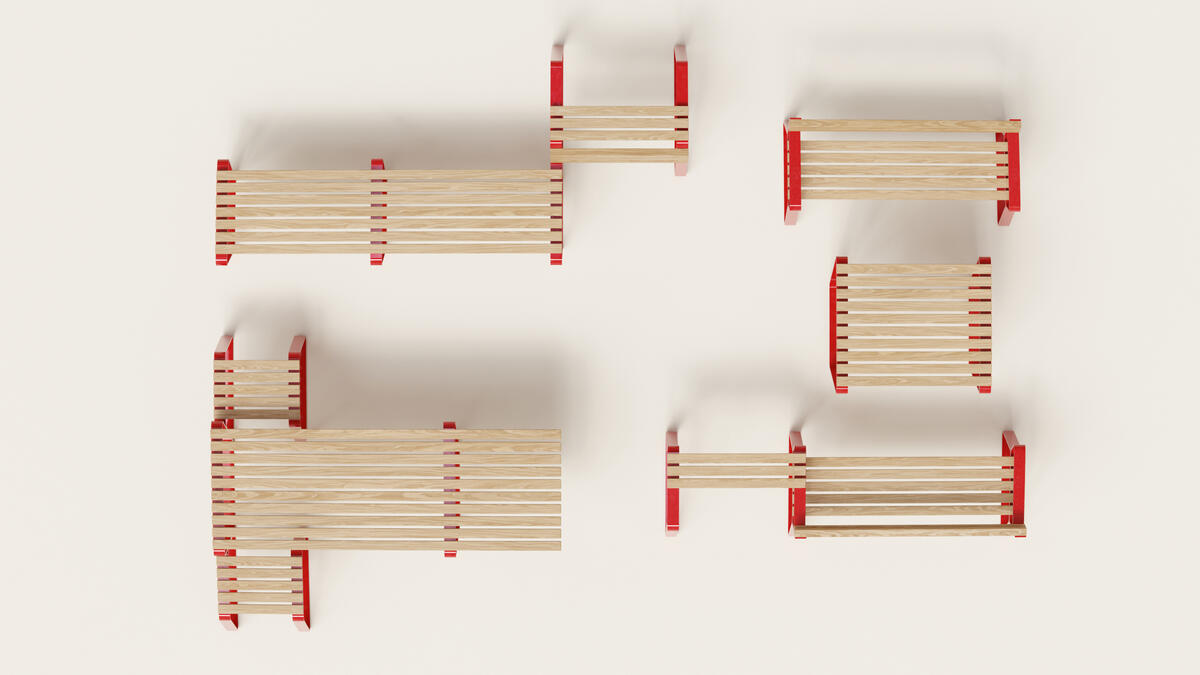
Everyone is welcome
In the configuration examples some spaces that seating would normally occupy have been removed to allow wheelchairs and strollers to park and be part of the community.
Endless possibilities
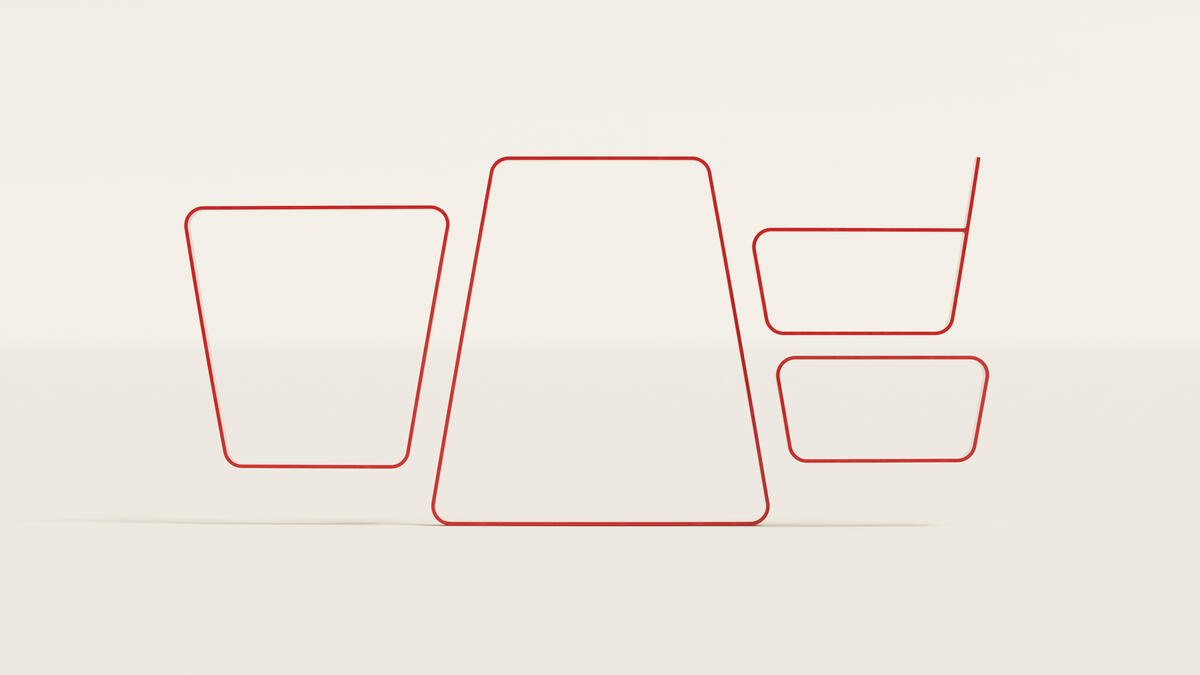
Skarva is an idea meant to be built upon and adapted to meet the community's needs. The base consists of four prefab parts made of steel, which are combined with wooden studs and ground anchors to create the public space.
Process
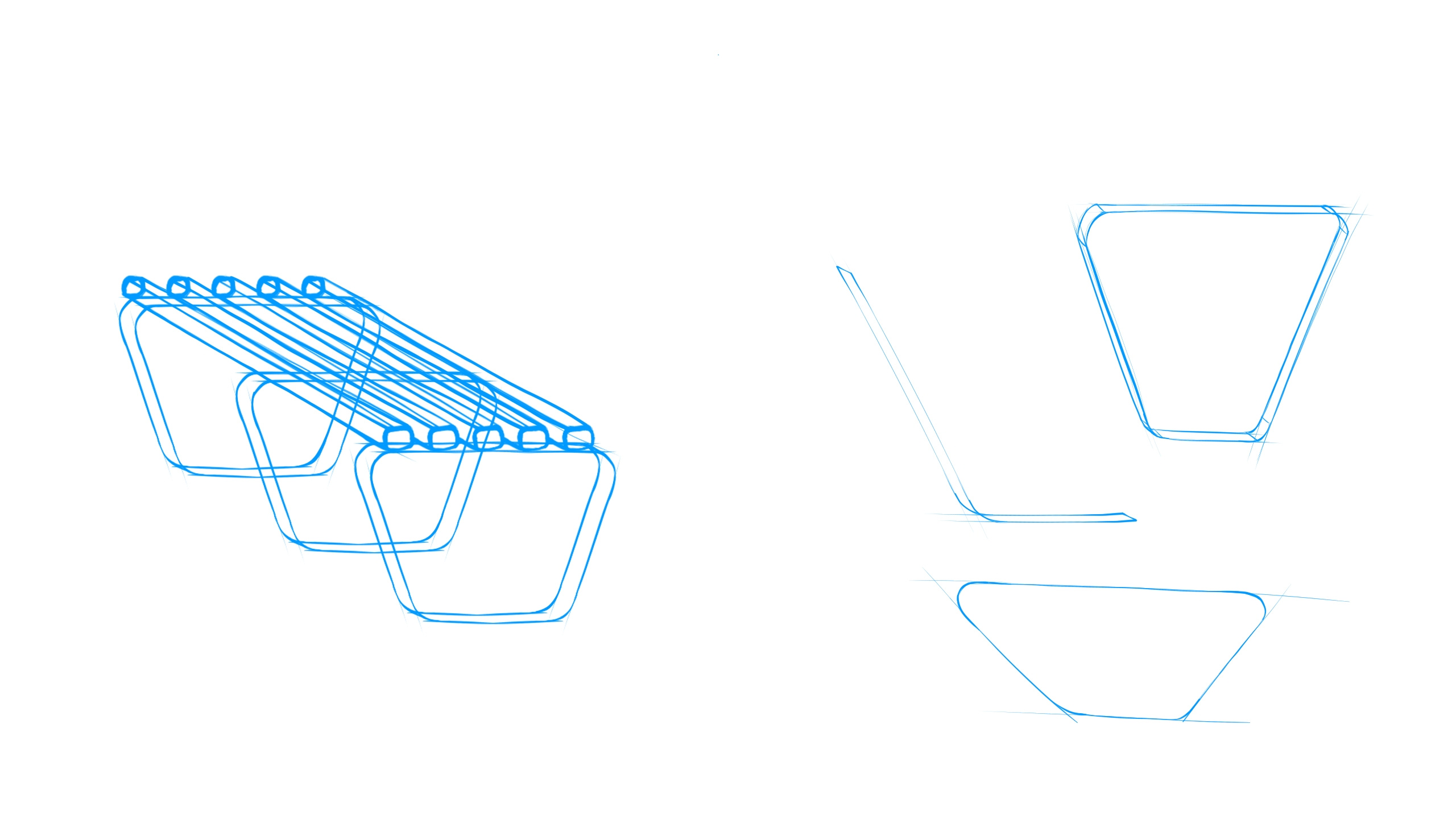
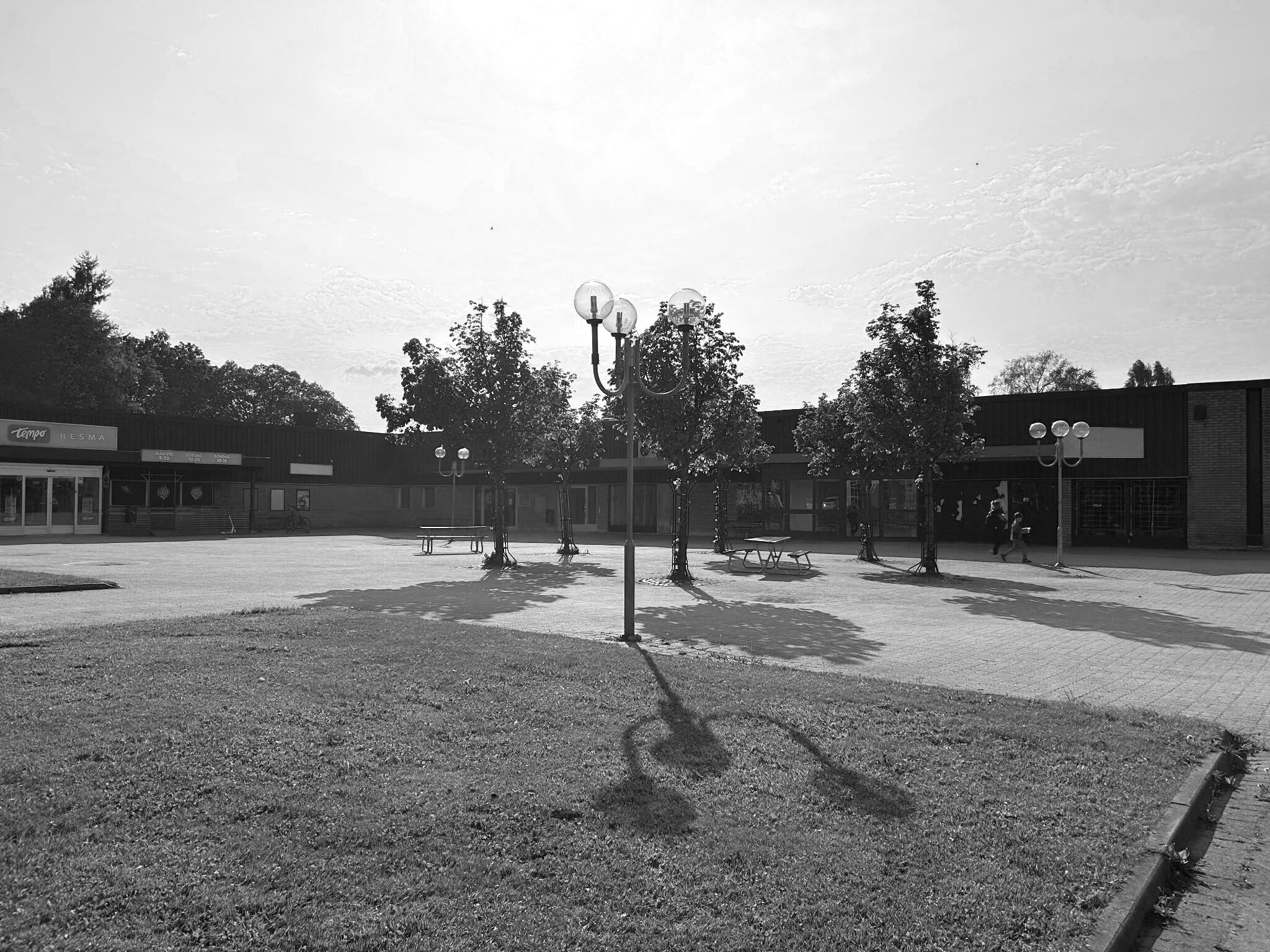
We had choosen the location, Bomhus Centrum pictured below, we brainstormed and sketched ideas for how we might address the severe lack of an inclusive meeting space at the plaza, after weeding out early ideas we decided to develop one concept further.
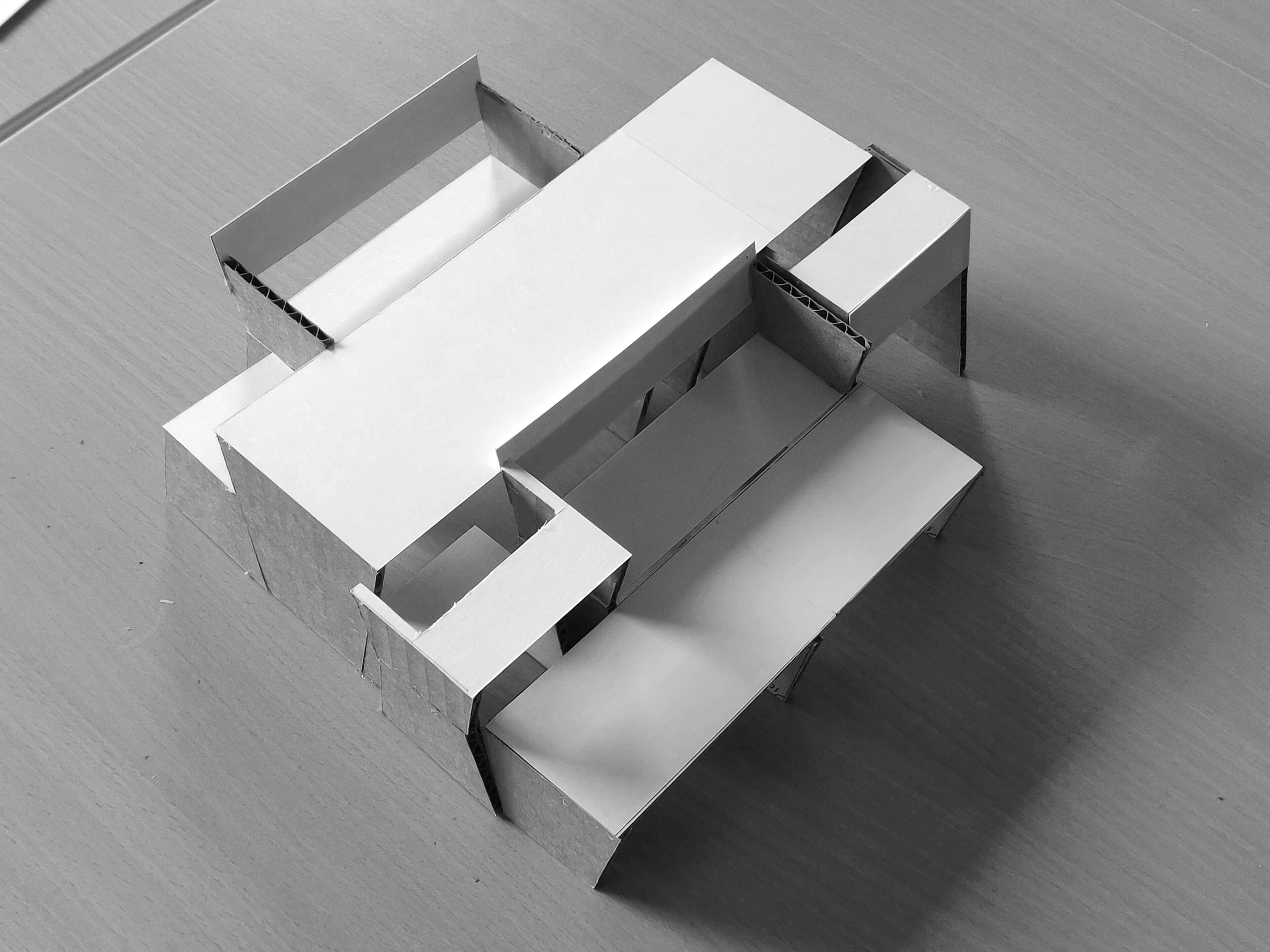
Scaled-down cardboard models for testing configurations, layouts, and getting a sense for how Skarva would need to work in practise. They were very useful for iteratively testing an optimal layout for the location aswell.
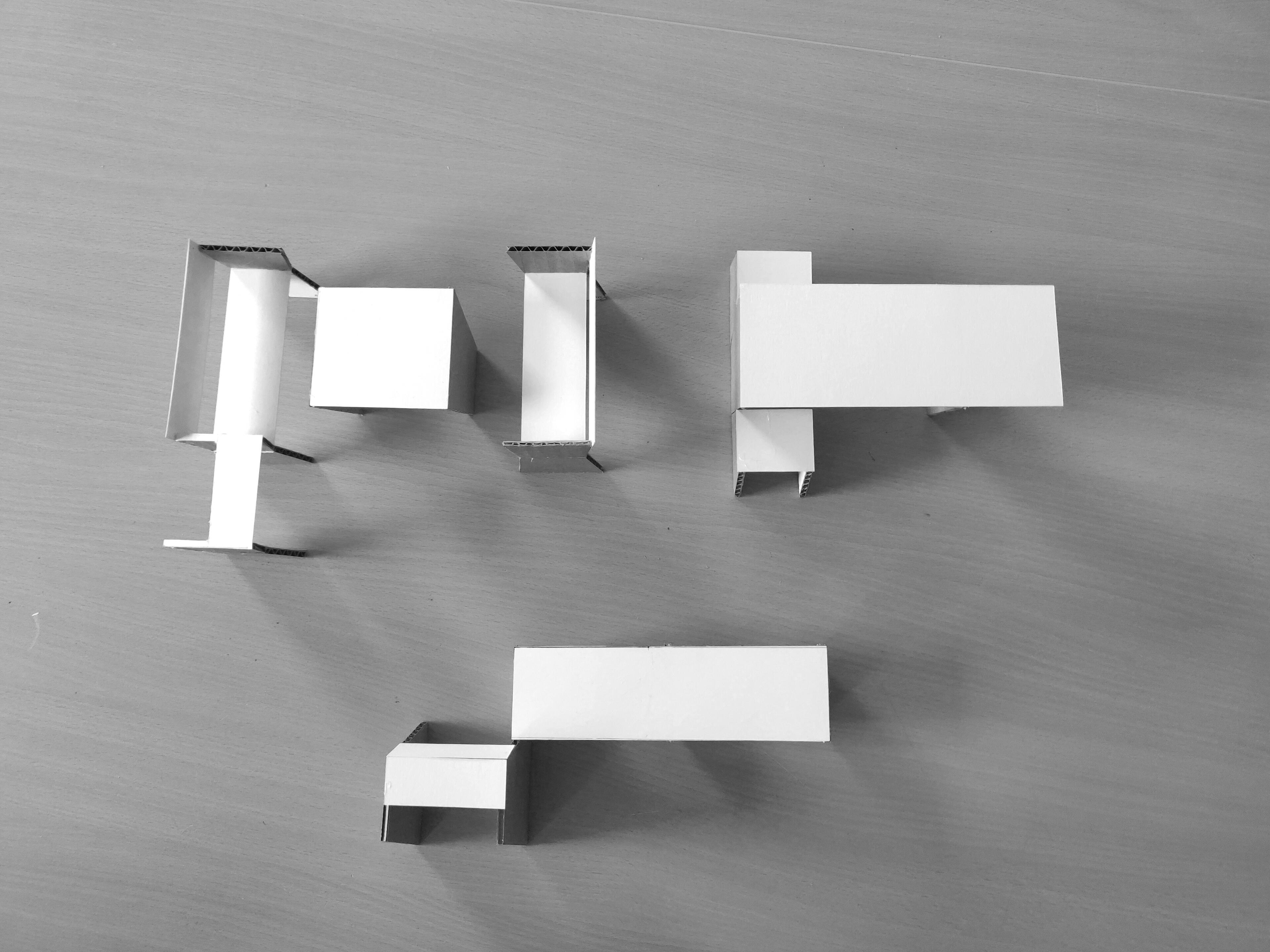
Exploring how one might package a pre-assembled set for shipping. Thanks to the set angles of the design, Skarva could be packed tightly. Less efficient and more costly than on-site assembly, but might be the correct choice under certain circumstances.
Credits
Felix Forsberg - Final design
Oscar Blix - Renderings & CAD
More on the way :)
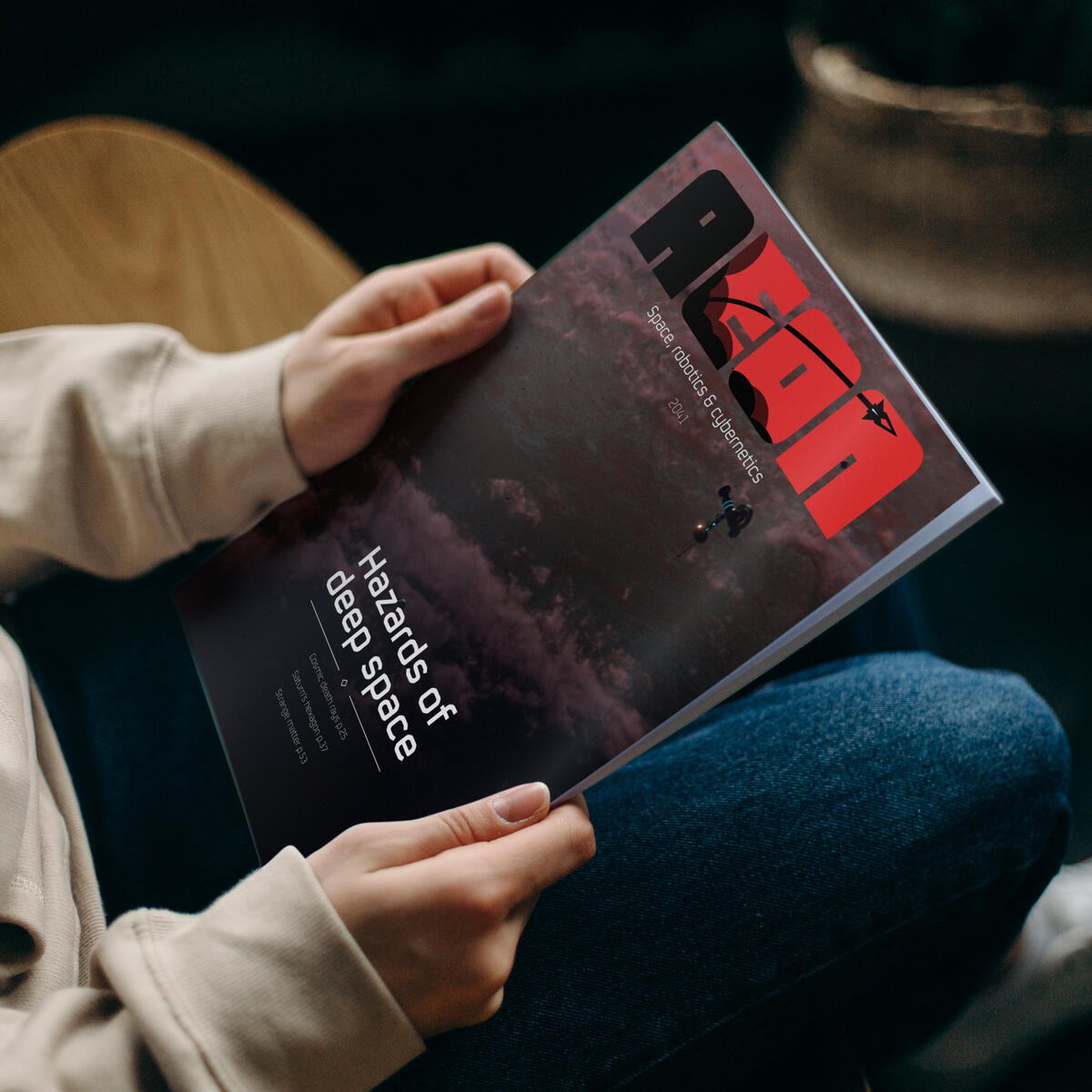
Aeon
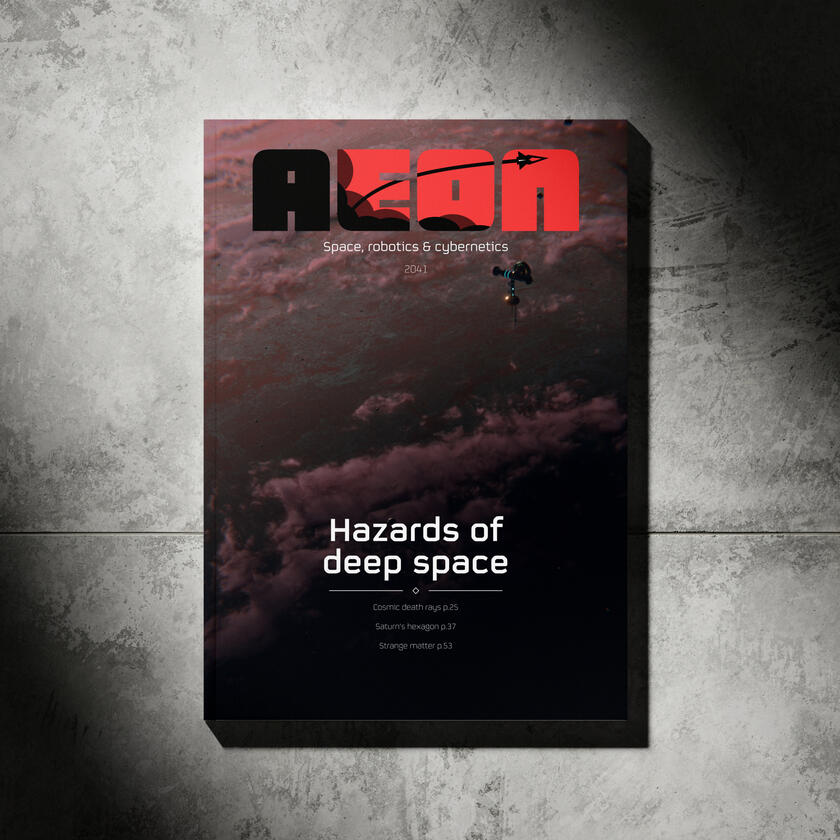
What will people in the near future care about? I believe our world will either grow larger and more complex in the coming decades as we move closer to becoming a spacefaring civilization, or we will be wiped out by the machine uprising orchestrated by a rogue artificial intelligence.Objective: Imagine a magazine made for the people of the near-future, which should address their daily concerns and provide vital information.
2026
2 days
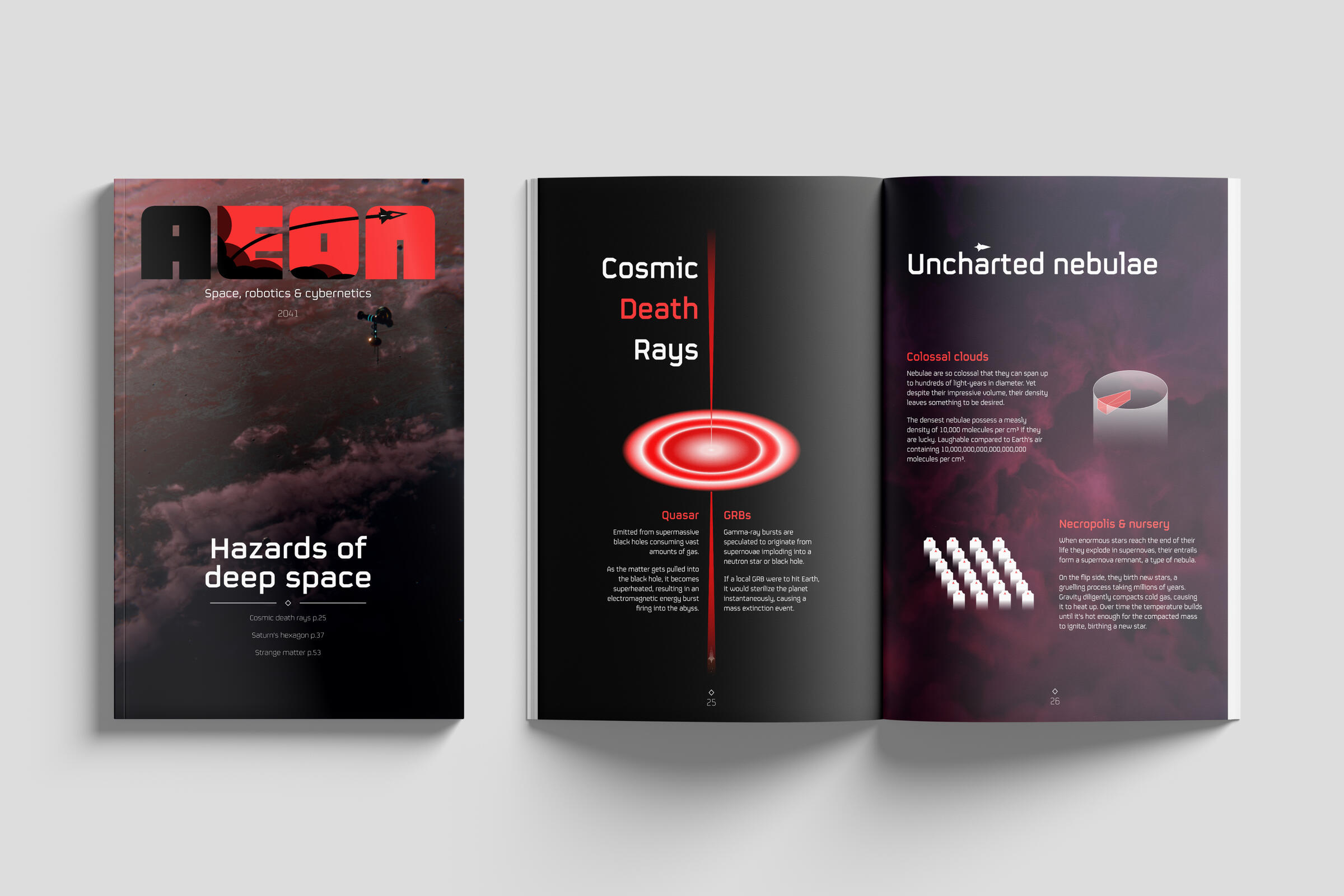
I designed three pages for this short project, which were adapted into mockups in order to give a preview of what the magazine would look like.
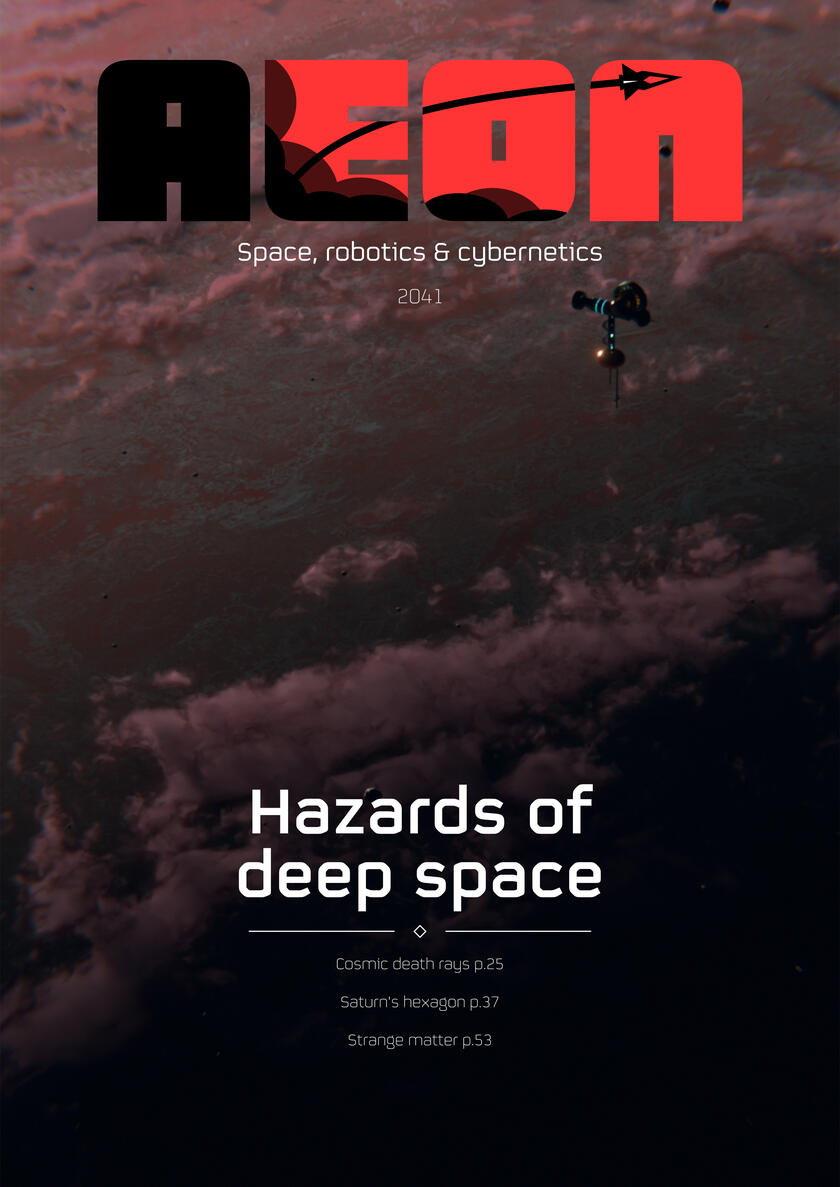
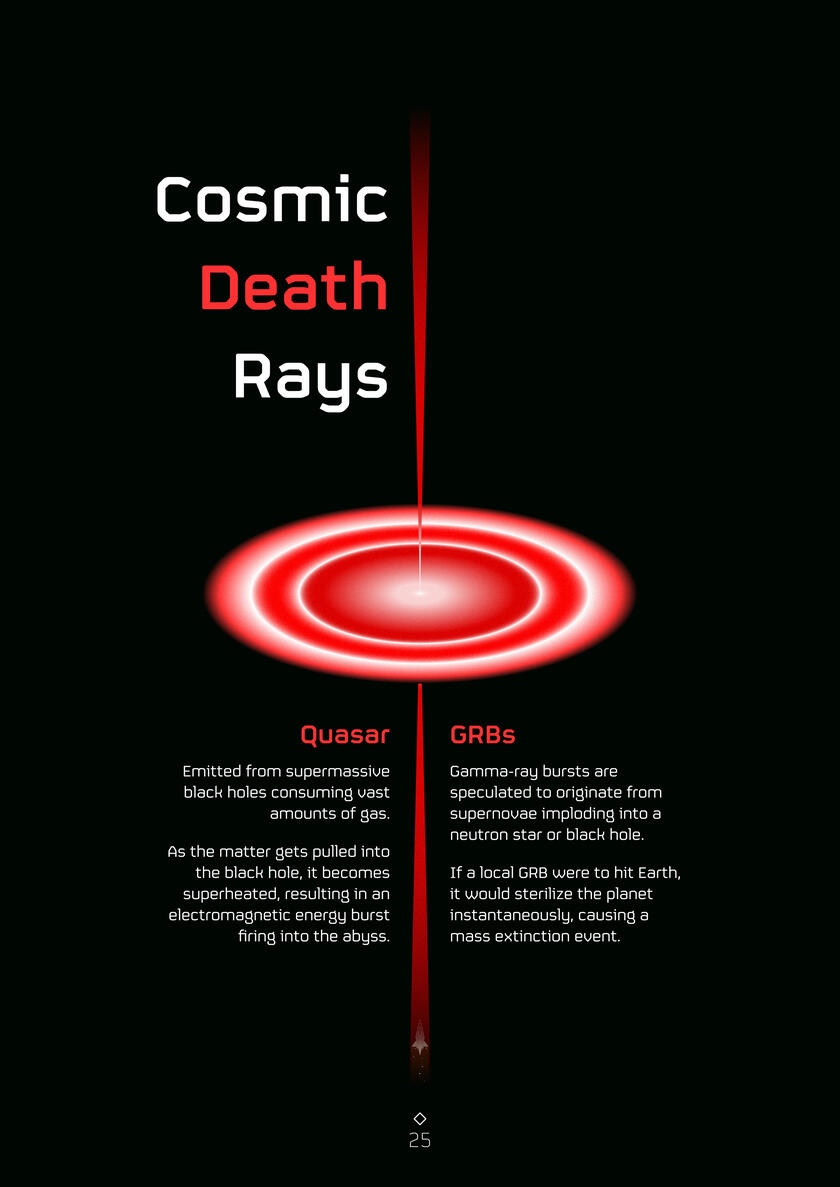
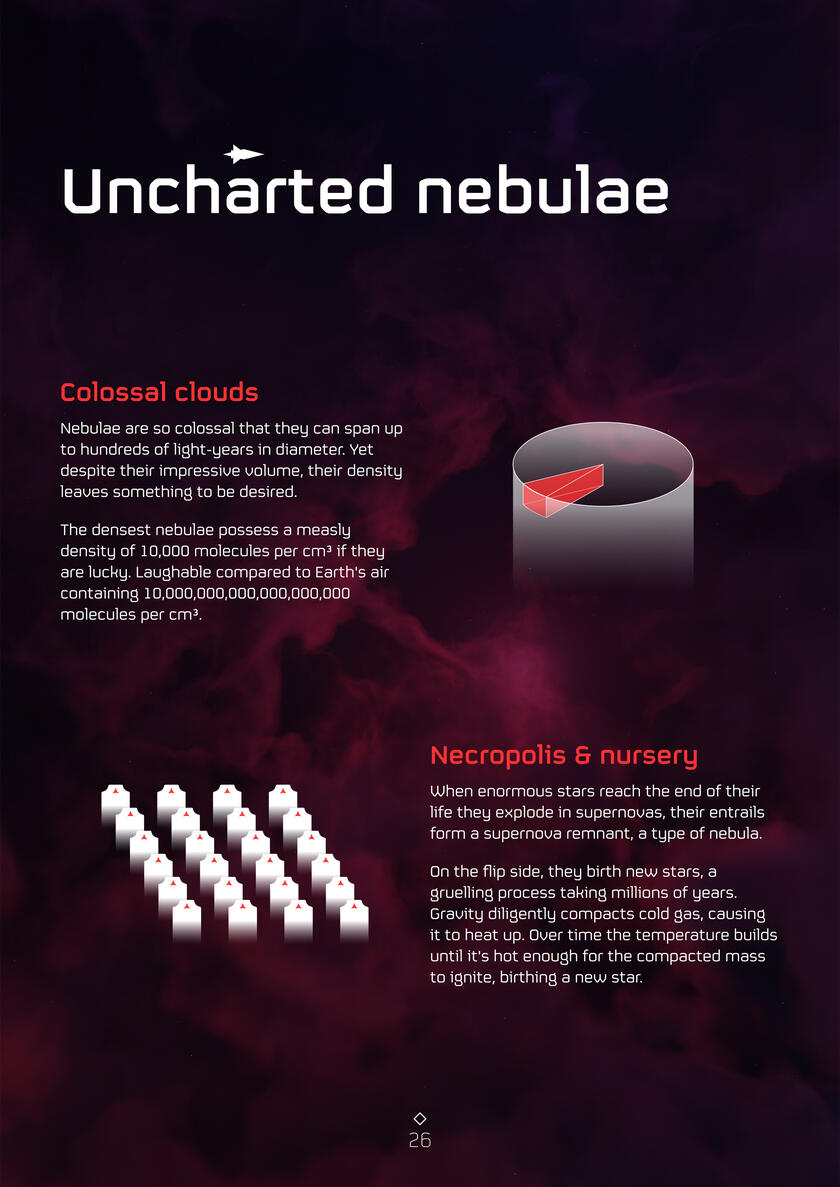
For the sci-fi visuals, I utilized some old renders made by me and complemented them with minimalistic illustrations to create an informative yet stimulating reader experience.
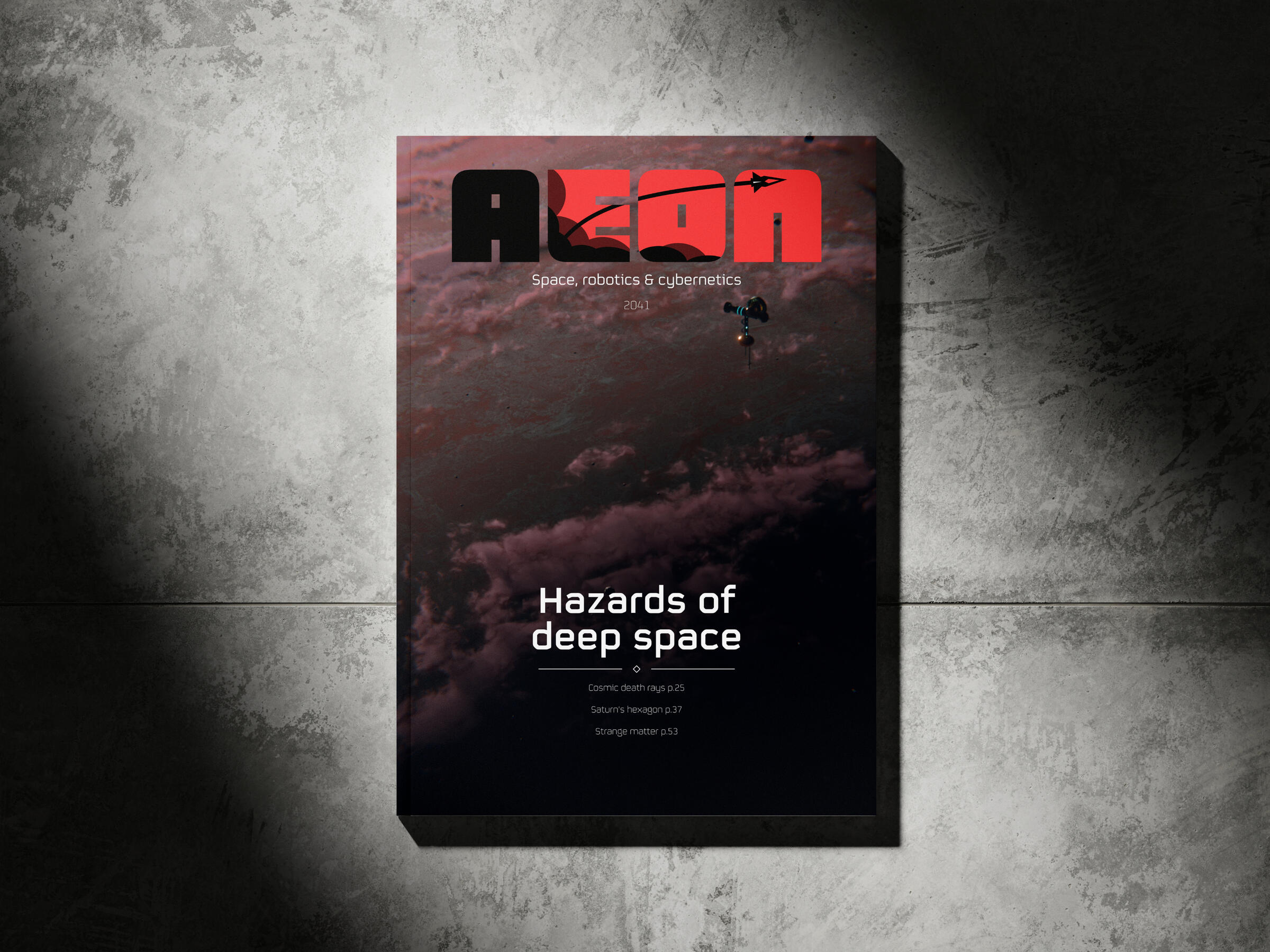
Aeon is the magazine for the people of tomorrow, containing all you need to know in order to not just survive, but thrive in the 21st century. This special issue is great for anyone looking to brush up on what to look out for when traversing the cold, inhospitable abyss.
Who I am
Oscar Blix
I am an industrial designer with a passion for minimalism. In my spare time I enjoy photography, sketching, music and cinema. These interests help me stay inspired while also serving as creative outlets.My core values when it comes to design are:
beauty in simplicity, sustainability without compromise and always design for the end user.

A bit of me


Fluent in
Contact
